Understanding Mental Health Treatment Levels
What Inpatient Mental Health Care Provides
Inpatient mental health care is designed for adults experiencing acute distress or severe symptoms that make daily functioning or safety a concern. When someone enters an inpatient program, they receive 24/7 supervision and a highly structured environment to stabilize their condition. This setting can be essential when there is a risk of harm to self or others, or when symptoms are so intense that daily self-care and judgment are affected.
Inside an inpatient facility, care teams—including psychiatrists, therapists, and nurses—work together to provide constant support. Treatment plans often include medication management, daily individual and group therapy, and crisis intervention. Evidence-based therapies such as Cognitive Behavioral Therapy (CBT) and Dialectical Behavior Therapy (DBT) are frequently used to help patients manage symptoms and develop healthier coping skills. For adults with co-occurring mental health and substance use disorders, inpatient settings can increase treatment completion rates compared to outpatient options1.
Another vital component is the structured daily schedule. Meals, activities, therapy sessions, and rest times are all planned to promote stability and recovery. While progress can feel slow, each small gain matters—and every step forward is a victory worth celebrating. Inpatient vs Outpatient Mental Health programs both aim for lasting recovery, but inpatient care offers a level of safety and structure that is sometimes essential for those in crisis.
Next, let’s look at how outpatient programs support recovery while allowing individuals to remain connected to their daily lives.
How Outpatient Programs Deliver Care
Outpatient programs are designed to make sure adults can access meaningful mental health care while still participating in everyday life. Unlike inpatient settings, outpatient treatment allows individuals to live at home and maintain work, school, or family commitments. Structured therapy sessions—typically held several times a week—form the backbone of outpatient care. These sessions can include individual counseling, group therapy, and family involvement, all guided by evidence-based practices like Cognitive Behavioral Therapy (CBT) and Dialectical Behavior Therapy (DBT)3.
A key strength of outpatient care is its flexibility. Treatment plans are tailored to adjust as symptoms change, so your adult child can step up or step down the intensity as needed. Progress may look different than in a hospital, but every bit of engagement counts. In one study, 57% of adults remained actively involved in an outpatient program for the full 12 weeks, demonstrating that meaningful connection and improvement are achievable without full-time supervision3.
Outpatient programs are not just a stopgap; they can be a steady source of support and skill-building for those who are ready for more independence. When comparing Inpatient vs Outpatient Mental Health, the best outcomes come from matching care intensity to current needs, not simply the setting. Next, we’ll discuss how treatment intensity and safety needs shape these decisions.
Treatment Intensity and Safety Needs
When 24/7 Supervision Becomes Essential
When 24/7 Supervision Becomes Essential: Inpatient vs Outpatient Mental Health
Sometimes, the difference between inpatient vs outpatient mental health care comes down to safety and immediate stability needs. When an adult is facing severe symptoms—like active suicidal thoughts, aggression, or a total inability to manage daily life—constant supervision becomes not only helpful but necessary. In these circumstances, inpatient care offers the around-the-clock support and structure that can make a real difference in preventing harm and stabilizing acute crises.
Research shows that individuals with co-occurring mental health and substance use disorders are more likely to complete treatment in inpatient settings than in outpatient programs1. The reason is clear: 24/7 supervision allows for immediate intervention, medication adjustments, and a controlled environment where risky behaviors can be managed safely. For some, this level of monitoring is the bridge that gets them from a place of crisis to a place where real healing can begin.
It’s important to remember that needing this type of care is not a failure. Every adult’s journey is unique. Choosing inpatient care when symptoms are most severe is a courageous step, not a setback. Even a short stay can mark a turning point, leading to improved functioning and a smoother transition to outpatient support. Yes, this is challenging—and that’s okay. Each day in a safe, structured setting is a win worth recognizing.
Next, we’ll explore how to recognize when someone is stable enough to benefit from outpatient care and what signs indicate readiness for more independence.
Stability Indicators for Outpatient Success
Stability Indicators for Outpatient Success: Inpatient vs Outpatient Mental Health
Before an adult can safely transition from inpatient to outpatient care, or begin treatment in an outpatient setting, certain stability markers should be present. These indicators help you and your care team decide if less intensive support will be effective and safe. Key signs include manageable symptoms without frequent crises, consistent medication use (when prescribed), and the ability to follow a routine—even if it’s a simple one. If your adult child can reliably attend appointments, use coping skills, and communicate needs, these are all promising signals of readiness.
Research shows that structured outpatient programs can achieve high engagement rates—57% of adults remained involved for the full 12 weeks of a multifaceted outpatient program, highlighting that stability and progress are possible outside of 24/7 care3. A supportive home environment is another critical factor. If family members or housemates are able to help with reminders, transportation, or encouragement, the likelihood of outpatient success increases.
It’s completely normal for progress to look gradual. Every time your adult child manages a tough day, reaches out for help, or completes a therapy session, it’s a genuine step forward. Remember, the decision between inpatient vs outpatient mental health care is about finding the right level of support, not about “graduating” from one to the other. Celebrate every milestone—your encouragement truly matters.
Next, we’ll examine how life responsibilities like work and school factor into choosing the best treatment fit.
Life Responsibilities and Treatment Fit
Balancing Work, School, and Recovery
Balancing Work, School, and Recovery: Inpatient vs Outpatient Mental Health
Supporting an adult child through recovery often means weighing the demands of daily life against treatment needs. Inpatient mental health programs require a full pause from work and school, offering an environment where individuals can focus solely on healing. While this break may feel disruptive, it creates space for stabilization and safety—especially valuable in times of crisis. Afterward, many find it easier to re-engage with responsibilities step by step, with improved coping skills and symptom control10.
Outpatient programs, by contrast, are built to fit around existing commitments. Adults can attend therapy sessions while continuing employment or education, which helps maintain routine and self-esteem. Research shows that flexible outpatient care allows 57% of participants to stay engaged for a full 12 weeks, underlining its feasibility for those balancing multiple roles3. This approach can empower your adult child to practice new strategies in real-life situations, with the support of their clinical team just a call or visit away.
Every bit of progress—whether it’s showing up for a shift, finishing a class project, or making it to therapy—is a win. The decision between inpatient vs outpatient mental health care isn’t about choosing one “better” path, but about matching the environment to your adult child’s current strengths and needs. Next, let’s explore the role of family involvement in both care settings.
Family Involvement Across Care Settings
Family Involvement Across Care Settings: Inpatient vs Outpatient Mental Health
Your role as a supportive presence is vital in both inpatient and outpatient mental health care. In inpatient settings, family involvement often takes the form of scheduled visits, family therapy sessions, and structured education about mental health conditions. This framework helps you stay connected, understand the treatment process, and prepare for a safe transition home. Even small gestures—like participating in a family session or writing a supportive note—can make a meaningful difference during an inpatient stay.
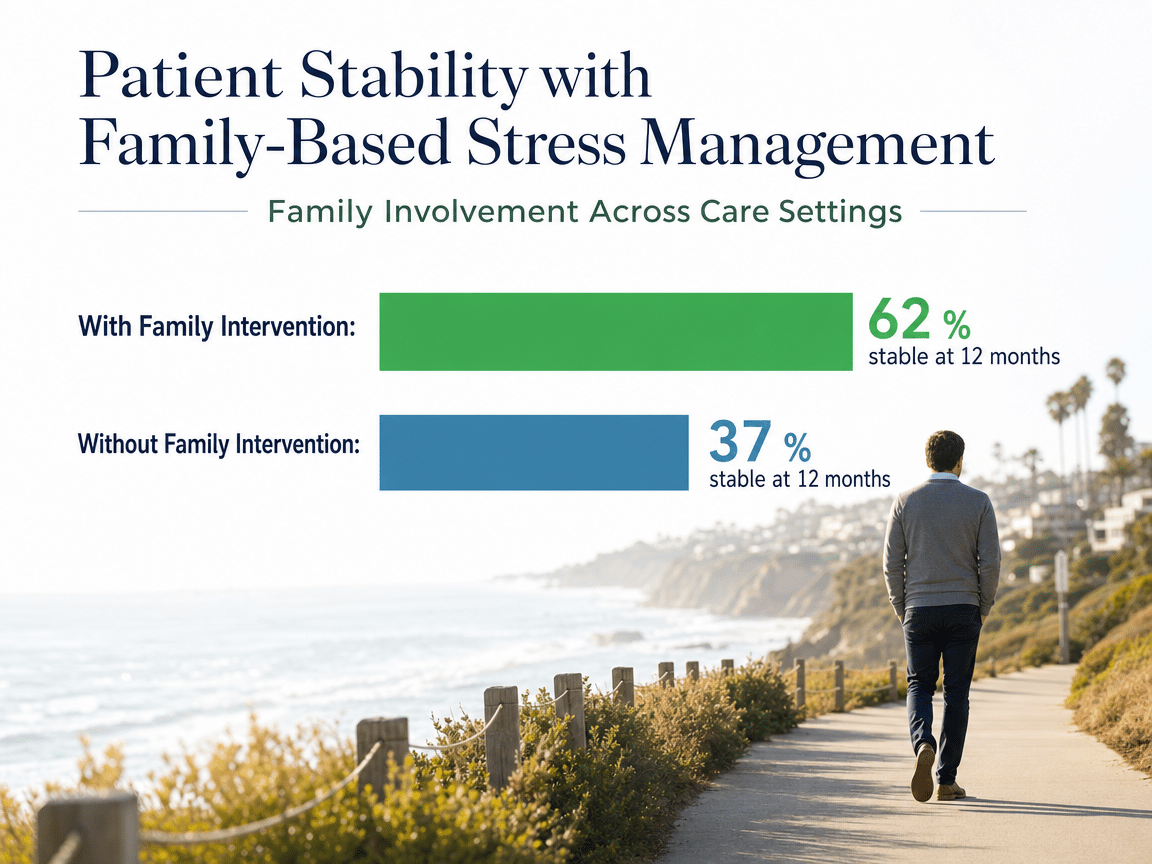
Outpatient programs, on the other hand, typically provide more opportunities for ongoing, direct engagement. You may join regular family therapy, attend educational workshops, or help reinforce coping strategies at home. Research shows that family-based interventions significantly improve long-term stability: 62% of individuals who received family-based stress management maintained stability over 12 months, compared to just 37% without such involvement7. Every supportive action you take, no matter how small, contributes to your adult child’s recovery journey.
Inpatient vs Outpatient Mental Health programs both recognize that family involvement is not just helpful—it’s often essential for lasting progress. The most effective programs focus on empowering you to become a partner in recovery, providing tools and encouragement along the way. As you look ahead, consider how evidence-based outcomes can help guide your choices and measure real progress.
Evidence-Based Outcomes Matter Most
Quality Indicators Beyond Setting Type
Quality Indicators Beyond Setting Type: Inpatient vs Outpatient Mental Health
When considering inpatient vs outpatient mental health care, the real measure of quality goes beyond simply where treatment happens. The most important indicators are the use of evidence-based therapies, the qualifications and consistency of the care team, and how well the program tailors treatment to each person’s needs. Studies show that both inpatient and outpatient programs can achieve strong outcomes when these factors are in place—what matters most is the match between the treatment plan and the individual’s current situation1.
Evidence-based approaches like Cognitive Behavioral Therapy (CBT) and Dialectical Behavior Therapy (DBT) remain the gold standard for treating mood, anxiety, and behavioral disorders in both settings4. Programs with a strong focus on skill-building, family involvement, and ongoing assessment also tend to see better engagement and stability rates. For example, 57% of adults in a structured outpatient program remained engaged for a full 12 weeks, a sign that high-quality care is possible outside of a hospital3.
It’s not the building or the schedule that leads to meaningful progress—it’s the commitment to individualized, evidence-based support. When you notice your adult child making steady gains, using new coping skills, or staying involved in treatment, those are real wins to celebrate. Remember, the right setting is the one that fits current needs and focuses on quality care.
Next, let’s discuss how to match care intensity to your adult child’s unique situation and changing needs.
Matching Care Intensity to Individual Needs
Matching Care Intensity to Individual Needs: Inpatient vs Outpatient Mental Health
Finding the right fit between your adult child’s needs and the level of mental health care is a crucial step—one that requires both clinical insight and compassionate support. In the inpatient vs outpatient mental health decision, you’re not simply choosing a setting; you’re working to match care intensity with real, day-to-day needs. For some, symptoms like persistent suicidal thoughts, acute psychosis, or rapidly escalating behaviors mean inpatient care is the safest place to begin healing. For others—especially when symptoms are less severe, daily routines are manageable, and the home environment is stable—outpatient care can deliver the same quality of evidence-based therapies in a more flexible format1.
Research consistently finds that outcomes improve when treatment intensity matches the individual’s current state. For example, those with higher symptom acuity benefit from the structure and supervision of inpatient settings, while those who are more stable can thrive in outpatient programs that allow them to maintain their work and family roles1. This isn’t about “graduate levels” or one-size-fits-all solutions—it’s about honoring where your adult child is right now, and adjusting care as needs change.
Every decision point is an opportunity to celebrate progress. If your adult child moves from inpatient to outpatient care, or steps up support when symptoms flare, those are victories that show resilience and growth. Remember, both settings can be effective—the best results come from a willingness to adjust care intensity over time. Next, we’ll discuss how to navigate common questions about transitioning between care levels and ensuring continued progress.
Finding the Right Path Forward
When your adult child needs mental health or dual diagnosis treatment, you face a challenge your professional training never quite prepares you for—applying your clinical knowledge to your own family. You understand treatment modalities, evidence-based interventions, and the continuum of care. But the question that matters most right now isn’t theoretical: does outpatient mental health treatment deliver the same quality outcomes as residential care when it’s your child who needs help?
The evidence says yes—outpatient mental health treatment provides equivalent clinical outcomes to inpatient care when properly matched to acuity level. What distinguishes effective treatment isn’t the setting’s intensity, but rather the clinical rigor, evidence-based protocols, and individualized care planning within it. Your adult child can access comprehensive dual diagnosis treatment, trauma-focused interventions, and psychiatric services through structured outpatient mental health treatment while maintaining the community connections that support long-term recovery.
The clinical question you’re really asking is about appropriateness: which level of care addresses your adult child’s current needs while supporting sustainable progress? Outpatient mental health treatment—whether through partial hospitalization or intensive outpatient programming—offers the therapeutic structure and clinical intensity needed for complex presentations, including co-occurring disorders, without the disruption and potential regression risks associated with residential removal from support systems. When outpatient mental health treatment includes integrated services for both mental health and substance use concerns, delivered through evidence-based modalities like DBT, CBT, and trauma processing, the outcomes match what you’d expect from any quality treatment environment—because quality care transcends setting.
Frequently Asked Questions
How do you transition from inpatient to outpatient care without losing progress?
Transitioning from inpatient to outpatient care can feel daunting, but it’s absolutely possible to maintain your adult child’s progress with the right supports. Strong communication between treatment teams, clear planning, and gradual step-down approaches help bridge the gap. Research highlights the value of structured transitional care programs, which improve outcomes and reduce the risk of disengagement during this vulnerable period8. Encourage your adult child to stay connected with outpatient providers right away and continue using skills learned in inpatient settings. Remind them, and yourself, that every day of engagement counts—even if the pace slows. Progress is still progress, and you’re both learning as you go.
Can someone switch from outpatient to inpatient if their condition worsens?
Yes, someone can move from outpatient to inpatient care if their symptoms get worse or safety becomes a concern. This switch is actually quite common in the inpatient vs outpatient mental health journey, especially when outpatient support isn’t enough to keep your adult child safe or stable. Clinical teams look for signs like increased risk of harm, loss of daily functioning, or rapid symptom escalation before recommending a higher level of care. Making this change is not a setback—it’s a courageous step to get the right help at the right time. Research shows that matching care intensity to current needs leads to stronger outcomes and better recovery1.
What happens if your adult child completes outpatient treatment but still struggles at home?
If your adult child completes outpatient treatment but is still struggling at home, it doesn’t mean the journey is over—or that progress hasn’t been made. Recovery from mental health challenges often takes ongoing support and, sometimes, another round of care at a different level. Research shows that both inpatient and outpatient programs are effective, but sometimes it’s necessary to adjust the intensity of support based on current needs1. Encourage open communication with your care team about what’s working and what’s not. Stepping up to a higher level of care or adding supports like family therapy or peer groups can help. Remember, every effort counts, and setbacks are just part of the process.
How long does each type of treatment typically last for co-occurring disorders?
The length of inpatient vs outpatient mental health treatment for co-occurring disorders depends on your adult child’s needs, progress, and safety. Inpatient programs are usually shorter and more intensive, often lasting from several days up to a few weeks, with the goal of stabilizing acute symptoms and ensuring safety1. Outpatient care is designed for longer-term support, typically ranging from 8 to 16 weeks, but can continue for months or even years if needed3. Research shows that 57% of adults in a structured outpatient program stayed engaged for a full 12 weeks, demonstrating that consistent participation is possible outside the hospital3. Every bit of progress matters—healing is not a race, but a journey.
What role does family therapy play in outpatient versus inpatient settings?
Family therapy is a vital support in both inpatient and outpatient settings, but how it’s delivered varies. In inpatient programs, family therapy often happens through scheduled sessions and educational meetings, helping you understand your adult child’s challenges and building a bridge for discharge planning. Outpatient care offers more frequent, ongoing family therapy sessions—sometimes weekly—so you stay directly involved in problem-solving and skill-building at home. Research shows family-based interventions boost long-term stability: 62% of individuals who received family-based stress management remained stable at 12 months, compared to 37% without it7. Inpatient vs Outpatient Mental Health care both rely on active family support to help your loved one thrive.
How do you know if your loved one is stable enough to maintain employment during treatment?
Determining if your loved one is stable enough to maintain employment during treatment starts with assessing daily functioning and symptom control. Key indicators include following a regular routine, consistently taking medications as prescribed, and reliably attending appointments. If your adult child can manage work responsibilities without frequent crises or overwhelming stress, this is a promising sign. Research highlights that in structured outpatient programs, 57% of adults stayed engaged for a full 12 weeks, showing that many can balance recovery with employment when stability is present3. Remember, every workday completed and every therapy session attended is genuine progress—no win is too small. If you’re unsure, collaborate with your treatment team for ongoing support and guidance.
References
- Summary of Evidence – Inpatient and Outpatient Treatment. https://www.ncbi.nlm.nih.gov/books/NBK507689/
- Comparison of Residential and Therapeutic Community Centers. https://pmc.ncbi.nlm.nih.gov/articles/PMC6612238/
- A Multifaceted Outpatient Treatment Model for Mood and Anxiety. https://pmc.ncbi.nlm.nih.gov/articles/PMC12636090/
- The Efficacy of Cognitive Behavioral Therapy: A Review of Meta-Analyses. https://pmc.ncbi.nlm.nih.gov/articles/PMC3584580/
- Psychiatric Hospital Versus Community Treatment: The Results of a Randomised Trial. https://pubmed.ncbi.nlm.nih.gov/6578788/
- Co-Occurring Disorders and Other Health Conditions. https://www.samhsa.gov/substance-use/treatment/co-occurring-disorders
- Family Interventions for Mental Disorders: Efficacy and Effectiveness. https://pmc.ncbi.nlm.nih.gov/articles/PMC1525058/
- Transitional Care Programs to Improve Post-Discharge Outcomes. https://pmc.ncbi.nlm.nih.gov/articles/PMC11634650/
- Implementation of the Recovery Model and Its Outcomes. https://pmc.ncbi.nlm.nih.gov/articles/PMC11083556/
- Efficacy of Long-Term Residential Treatment for Persistent Mental Illness. https://pmc.ncbi.nlm.nih.gov/articles/PMC5887400/