
Borderline Personality Disorder Treatment Program
Borderline personality disorder (BPD) can impact every part of a person’s life, including relationships, emotions, behaviors, and overall stability. At 449 Recovery, our borderline personality disorder treatment program provides structured, evidence-based care for individuals who need specialized support to manage symptoms and build a healthier, more balanced life.
Our clinical team offers a compassionate, strengths-focused approach grounded in therapies proven to help people with BPD, including DBT, trauma-informed care, and individualized treatment planning. On this page, you’ll learn what BPD is, how it affects daily functioning, and how our treatment program can support long-term healing and recovery.
What is Borderline Personality Disorder?
Borderline personality disorder is a mental health condition that affects how a person thinks, feels, and relates to others. People with BPD experience intense emotions that can change quickly, making it hard to manage feelings or control reactions. These mood shifts aren’t just “bad days” — they’re part of a consistent pattern that influences daily life.
According to the National Institute of Mental Health, about 1.4% of adults in the United States have borderline personality disorder. BPD typically starts in early adulthood and affects people of all backgrounds.
The condition creates three main problems:
- Emotional instability: Feelings change rapidly and intensely
- Relationship difficulties: Fear of abandonment leads to unstable connections
- Self-image issues: Uncertainty about identity and self-worth
While BPD can be difficult to live with, it’s a treatable condition. With proper support and evidence-based treatment, many people find relief from symptoms and learn to manage their emotions and relationships more effectively.
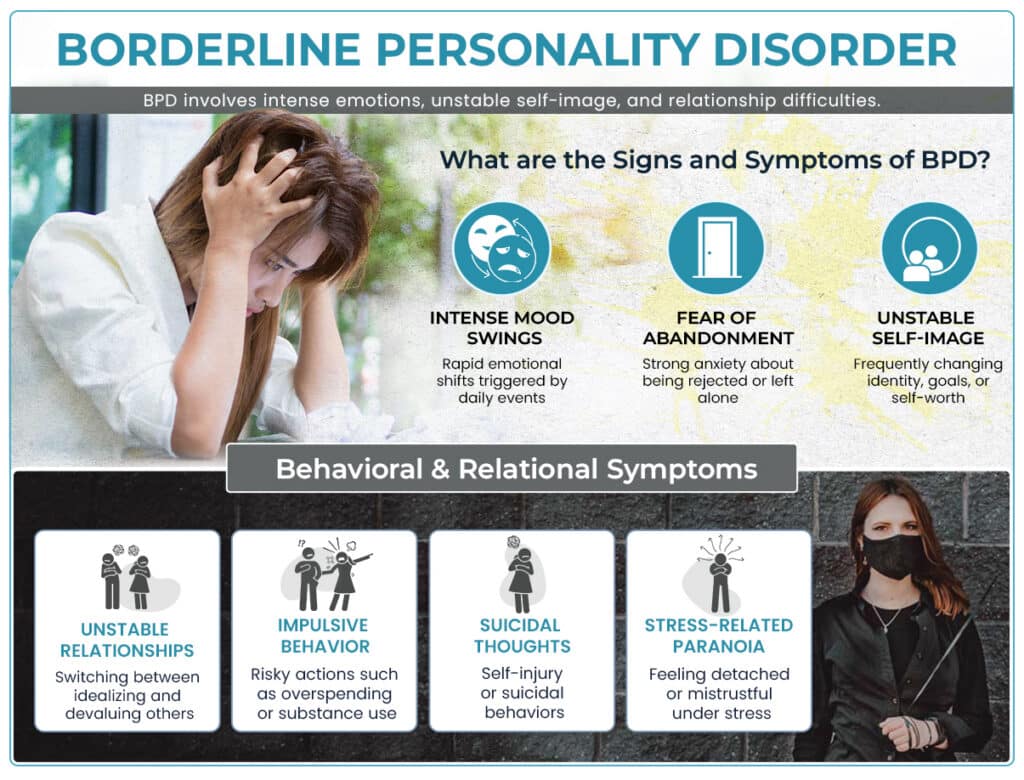
What are the Signs and Symptoms of BPD?
BPD symptoms create patterns that interfere with work, relationships, and daily activities. Here’s what to look for:
- Emotional roller coasters: Mood swings that last hours or days, going from happiness to anger or sadness without clear triggers
- Fear of being left behind: Desperate efforts to avoid real or imagined abandonment, even if it means clinging to unhealthy relationships
- Black-and-white thinking: Seeing people as either all good or all bad, with no middle ground
- Risky behaviors: Acting without thinking about consequences, like spending sprees, unsafe sex, or substance use
- Self-harm or suicidal thoughts: Using physical pain to cope with emotional pain, or having thoughts about ending life
- Feeling empty: A chronic sense of boredom or feeling hollow inside
- Explosive anger: Intense rage that seems out of proportion to the situation
- Stress-related paranoia: Feeling suspicious of others or disconnected from reality during stressful times
These symptoms typically appear by early adulthood and create ongoing challenges in multiple areas of life.
Why Do BPD Treatment Programs Matter?
Untreated BPD creates serious problems that get worse over time. People with untreated BPD often struggle to keep jobs, maintain relationships, or complete school. The emotional instability leads to crisis situations that can result in hospitalization, legal problems, or dangerous behaviors.
Research from recent years shows that proper treatment makes a real difference. Studies indicate that specialized therapies can reduce symptoms significantly. The National Institute of Mental Health reports that many people with BPD who receive evidence-based treatment see major improvements in their symptoms and quality of life.
Treatment benefits include:
- Fewer emotional crises: Learning to manage intense feelings before they become overwhelming
- Stronger relationships: Developing skills to communicate needs and handle conflict
- Reduced self-harm: Finding healthier ways to cope with emotional pain
- Better daily functioning: Maintaining work, school, and personal responsibilities
Without treatment, BPD symptoms typically continue or worsen. With proper care, many people experience significant improvement within the first year of treatment.
What Types of BPD Treatment Programs are Available?
Borderline personality disorder treatment programs come in different levels of intensity. The right program depends on symptom severity, safety concerns, and available support at home.
Outpatient care involves attending therapy sessions once or twice weekly while living at home. This works best for people who are stable and have strong family or friend support. Sessions typically include individual therapy using methods like dialectical behavior therapy (DBT) or cognitive-behavioral therapy.
Intensive outpatient programs require attending therapy three to five days per week for several hours each day. Participants continue living at home but receive more structured support than traditional outpatient care. These BPD programs combine group therapy, individual sessions, and skills training.
Residential treatment for borderline personality disorder provides 24-hour care in a structured living environment. People stay at the facility for 30 to 90 days, participating in daily therapy, group activities, and skill-building sessions. This level of care works for people who need more support than outpatient programs can provide.
Borderline personality disorder inpatient treatment happens in hospitals during crisis situations. The focus is on safety and stabilization, typically lasting 5 to 14 days. After stabilization, people usually transition to residential or outpatient programs.
Finding Quality BPD Treatment Centers
Not all treatment centers offer the same quality of care, so it’s important to know what separates good programs from poor ones.
Questions to ask potential providers:
- What specific therapies do you use for BPD?
- How long have your therapists been treating personality disorders?
- What’s your staff-to-client ratio?
- Do you include families in treatment?
- What happens after the program ends?
Look for BPD treatment centers that have proper licensing from the state and accreditation from organizations like The Joint Commission or CARF. The best programs use evidence-based therapies specifically designed for BPD, not generic counseling approaches.
Insurance coverage varies widely between programs. Some residential treatment centers for borderline personality disorder accept insurance, while others require private payment. Contact both the treatment center and your insurance company to understand costs before starting treatment.
Which Evidence-Based Therapies Work for BPD?
The most effective BPD treatment centers use therapies specifically developed for personality disorders. These aren’t the same as general counseling approaches used for depression or anxiety.
Dialectical Behavior Therapy (DBT) is considered the gold standard for BPD treatment. DBT teaches four main skill areas: mindfulness, emotion regulation, distress tolerance, and interpersonal effectiveness. DBT significantly reduces self-harm behaviors and improves emotional stability.
Mentalization-Based Therapy (MBT) helps people understand their own thoughts and feelings, as well as those of others. This therapy focuses on improving the ability to think before reacting emotionally.
Schema Therapy addresses the deep-rooted patterns of thinking and behavior that develop early in life. It combines elements from different therapeutic approaches to target the core issues underlying BPD.
The best BPD treatment center will clearly explain which therapies they use and why. Avoid programs that can’t specify their treatment approach or rely solely on support groups and general counseling.
Residential Treatment Centers for Borderline Personality Disorder
Residential treatment centers for borderline personality disorder provide the most comprehensive care outside of hospitals. These facilities offer 24-hour support in a structured environment designed specifically for people with severe BPD symptoms.
What makes these centers different:
- Specialized staff: Therapists trained specifically in personality disorders and crisis intervention
- Structured environment: Daily schedules that include therapy, meals, activities, and rest
- Peer support: Living with others who understand similar struggles
- Safety focus: Constant supervision to prevent self-harm or dangerous behaviors
- Skill practice: Opportunities to use new coping strategies in real situations
A quality personality disorder treatment center will have clear protocols for safety, individualized treatment plans, and preparation for returning to normal life after discharge.
Dual Diagnosis Care for BPD
Many people with BPD also struggle with substance use, depression, or anxiety. These co-occurring conditions require specialized treatment that addresses all issues simultaneously.
At 449 Recovery, we understand that treating BPD alone isn’t enough when someone also has addiction problems. Our dual diagnosis approach means therapists work on both the personality disorder and substance use at the same time. This integrated method prevents one condition from undermining treatment for the other.
Why dual diagnosis matters:
- Connected symptoms: BPD emotional instability often triggers substance use
- Treatment conflicts: Some BPD medications don’t mix well with certain addiction treatments
- Relapse prevention: Both conditions can trigger relapses in the other
Programs that separate BPD and addiction treatment often see people bounce between different facilities without making real progress.
Starting Your Recovery Journey
Recovery from borderline personality disorder is possible with the right treatment approach. Many people with BPD go on to live stable, fulfilling lives after learning effective coping skills and emotional regulation techniques.
At 449 Recovery, our person-centered approach means treatment plans are built around each individual’s specific needs and goals. Our expertise in dual diagnosis care helps address both BPD and any co-occurring substance use or mental health conditions. This comprehensive approach supports lasting stability and meaningful recovery.
For questions about BPD treatment options or to schedule a confidential consultation, contact 449 Recovery today.
Dr. Barek Sharif, LMFT
(Medical Reviewer)
Dr. Sharif is a Licensed Marriage and Family Therapist who joined 449 Recovery in 2020 and oversees clinical operations as the Chief Clinical Officer. He earned his B.A. in Psychology and M.S. in Clinical Psychology from Vanguard University and completed his Doctor of Psychology from California School of Professional Psychology. Since 2011, Dr. Sharif has been dedicated to helping individuals, couples, and families heal from co-occurring disorders, including mental health, relational, and substance use challenges. He has led workshops on family dynamics, attachment injuries, spirituality in sobriety, and the impact of trauma on relationships.
Frequently Asked Questions
Outpatient therapy sessions typically cost $100 to $400 per session, while residential treatment can cost several thousand dollars per week. Many insurance plans cover a portion of BPD treatment costs, especially for evidence-based programs.
Most people see significant improvement within 6 to 12 months of starting intensive treatment, though full recovery often takes 1 to 2 years. The timeline depends on symptom severity and whether other mental health conditions are present.
Outpatient and intensive outpatient programs allow people to maintain work or school schedules. Residential programs require taking time off, but many employers provide medical leave for mental health treatment.
Residential treatment becomes necessary when someone is at high risk for self-harm, has frequent crisis episodes, or hasn’t improved with outpatient care. A mental health professional can assess whether this level of care is appropriate.