
PTSD Treatment Centers in Orange County
Many people in Orange County experience trauma at some point in their lives. Trauma can happen after events such as accidents, violence, abuse, or the sudden loss of someone close. Sometimes, the effects of trauma last much longer than expected and begin to affect daily life.
PTSD, or Post-Traumatic Stress Disorder, is a condition that can develop after someone goes through or witnesses something very distressing. For some people, these experiences cause lasting changes in the way they think, feel, and behave.
At 449 Recovery, we understand that trauma affects each person differently. Our trauma-informed approach uses evidence-based therapies to help people heal from PTSD and reclaim their lives. Learning about PTSD and how it’s treated helps people understand why professional care makes a difference.
What Is Ptsd And Why Does It Happen
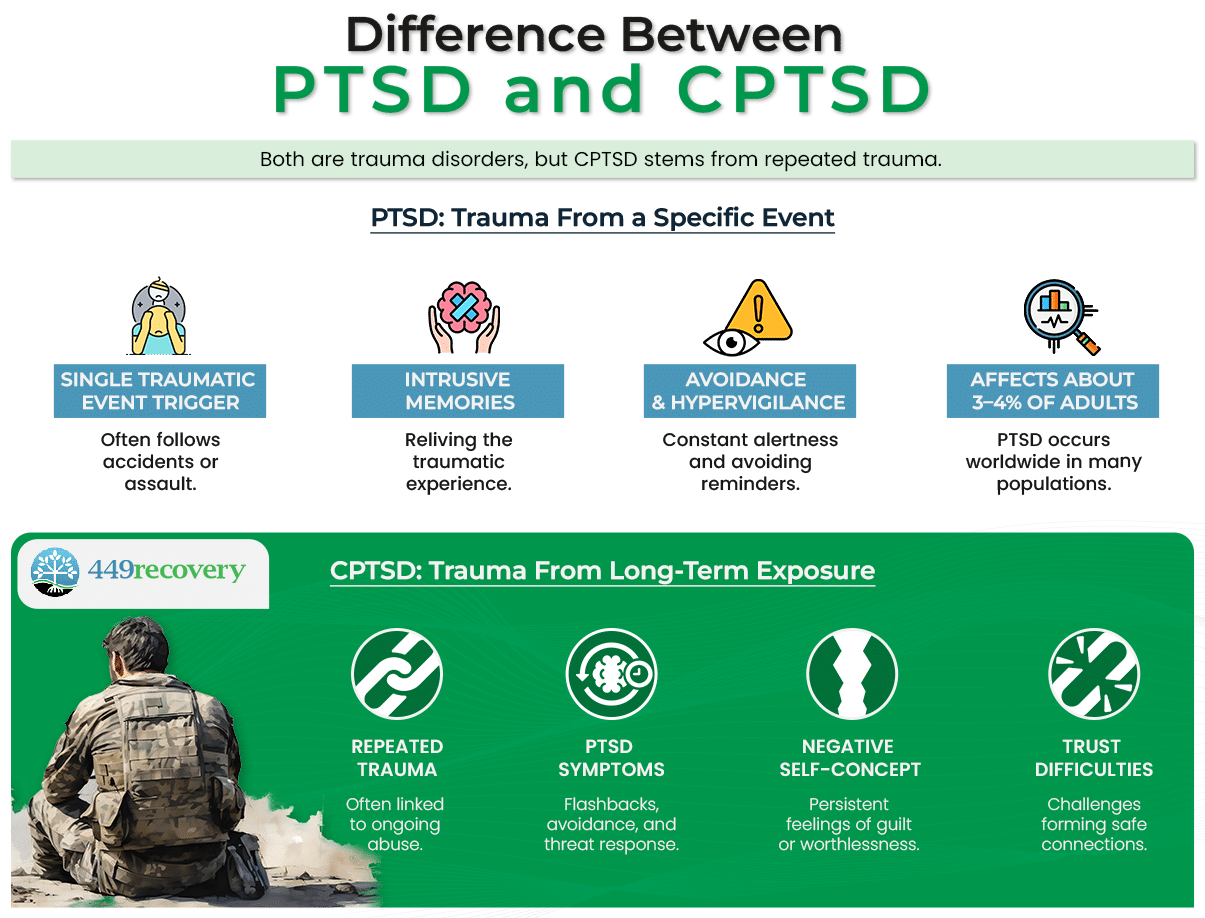
PTSD stands for Post-Traumatic Stress Disorder. PTSD occurs after someone experiences or witnesses a traumatic event, such as an accident, assault, disaster, or other intense episode. PTSD affects the brain by changing the way a person responds to stress. This disrupts normal emotional and memory processes, causing difficulties in mood, memory, and behavior. People may find it hard to manage emotions or feel safe even long after the original event is over.
Untreated PTSD can lead to depression, substance use, relationship problems, and physical health issues. Early intervention with trauma therapy in Orange County can help prevent these complications.
Signs You Might Need Trauma Therapy In Orange County
Symptoms of trauma that continue for more than one month after a distressing event can signal the presence of PTSD. These symptoms can look different depending on a person’s age, cultural background, or life experiences.
A brief self-assessment can help identify when trauma therapy may be appropriate. Ask yourself if you’re reliving the event through flashbacks or nightmares, avoiding reminders of the trauma, feeling emotionally numb or detached, or feeling constantly on edge or anxious.
Flashbacks involve intense memories that feel as if the traumatic event is happening again in real time, rather than just being remembered. During a flashback, you might see, hear, or smell things from the traumatic experience. Nightmares related to trauma are often vivid and may cause feelings of panic or fear upon waking.
Avoidance includes staying away from places, people, or conversations that bring up memories of the trauma. You might stop driving after a car accident or avoid crowded places after an assault. Emotional numbing refers to feeling cut off from emotions or from people around you. Activities that once brought joy may no longer feel meaningful.
Hypervigilance is a state of being constantly alert to danger, even when none is present. Physical symptoms can include a racing heart, sleep difficulties, or being easily startled. You might feel like you need to constantly scan your environment for danger, even in safe situations like your own home.
Effective PTSD Treatment Approaches In Orange County
Orange County offers several evidence-based treatments for PTSD. Evidence-based means that these therapies have been tested in scientific studies and shown to reduce symptoms. Each person’s treatment is tailored to their own experiences and needs.
| Treatment Approach | Best For | Typical Duration | Available at 449 Recovery |
|---|---|---|---|
| CBT | Adults with specific trauma | 12-16 weeks | Yes |
| EMDR | Single-incident trauma | 8-12 sessions | Yes |
| DBT | Emotional regulation issues | 6+ months | Yes |
| Group Therapy | Social support needs | Ongoing | Yes |
Cognitive Behavioral Therapy, or CBT, is a type of talk therapy that focuses on how thoughts influence feelings and actions. Trauma-Focused CBT is a version designed specifically for people with PTSD, which helps process and reframe memories of trauma.
During CBT sessions, you work with a therapist to identify negative thought patterns that developed after the trauma. For example, if you survived a car accident, you might think “I’m never safe” or “Bad things always happen to me.” CBT helps challenge these thoughts and develop more balanced perspectives. At 449 Recovery, CBT is offered as a core part of trauma treatment programs.
Eye Movement Desensitization and Reprocessing, or EMDR, is a therapy that involves recalling traumatic memories while focusing on a therapist’s hand movements or other repeated visual cues. During these sessions, you talk about your trauma while following the movement with your eyes, which helps the brain process the memory differently.
EMDR doesn’t require you to talk about every detail of the trauma. Instead, the therapy helps your brain file the traumatic memory in a way that reduces its emotional impact. Many people report feeling less distressed when thinking about their trauma after completing EMDR treatment.
Dialectical Behavior Therapy, or DBT, teaches skills for managing strong emotions and improving relationships. The main skills in DBT are mindfulness, distress tolerance, emotion regulation, and interpersonal effectiveness.
DBT is particularly useful for people with complex trauma – trauma that happened repeatedly over time, often in childhood. Complex trauma can make it harder to regulate emotions and maintain stable relationships. DBT provides concrete tools to handle these challenges.
The four DBT modules include:
- Mindfulness: Learning to stay present and aware without judgment
- Distress tolerance: Coping with crisis situations without making them worse
- Emotion regulation: Understanding and managing intense emotions
- Interpersonal effectiveness: Communicating needs and maintaining healthy relationships
This therapy is included in the trauma treatment programs at 449 Recovery and other PTSD treatment centers in Orange County.
When Medication Helps With PTSD Treatment
Medication is sometimes used together with therapy to help people manage PTSD symptoms. It’s not used as the only treatment, but it can help with specific problems like anxiety, depression, or trouble sleeping.
The most common medications for PTSD are SSRIs (selective serotonin reuptake inhibitors) like sertraline and paroxetine. These medications are FDA-approved specifically for PTSD treatment. SNRIs (serotonin-norepinephrine reuptake inhibitors) may also be prescribed to target symptoms like depression and anxiety.
Anti-anxiety medications may be prescribed for short periods to help with severe anxiety, though they’re not recommended for long-term use. Sleep aids are sometimes used to address sleep problems, including trauma-related nightmares.
Deciding on medication involves meeting with a psychiatrist or medical provider who specializes in trauma treatment. This person will discuss your symptoms and health history to recommend the most appropriate medication and dosage. 449 Recovery includes medication management as part of its trauma therapy programs, ensuring therapy and medication options work together.
How To Find The Right Trauma Therapist In Orange County
Selecting a trauma therapist is an important part of the recovery process for PTSD. Therapists often have different backgrounds, specialties, and training, so their approach to care can vary significantly.
Key qualifications to look for include:
- Specialized training: Certifications in trauma treatments like EMDR, CPT (Cognitive Processing Therapy), or TF-CBT (Trauma-Focused CBT)
- Experience: Several years specifically treating trauma and PTSD, not just general mental health issues
- Treatment approach: Methods that match your preferences and comfort level
- Personal fit: Feeling safe, heard, and understood during initial consultations
You can ask potential therapists about their experience working with PTSD, the specific methods they use, and how they track progress during treatment. Many trauma therapists in Orange County offer brief consultations to help you determine if they’re a good fit.
At 449 Recovery, the team includes trauma specialists who have advanced training in multiple evidence-based therapy approaches. This allows for personalized treatment that can adapt as your needs change during recovery.
What To Expect During PTSD Treatment And Recovery
Recovery from PTSD doesn’t follow one set timeline. Cognitive Behavioral Therapy and EMDR often take between two and four months to complete, though this can vary depending on the person. Dialectical Behavior Therapy and group therapy for PTSD usually last six months or more.
Several factors affect the length of recovery. These include the type of trauma experienced, how long symptoms have been present, and the level of support available from family, friends, and professionals. People who experienced trauma in childhood may need longer treatment than those who developed PTSD from a single adult experience.
PTSD symptoms can return after successful treatment, especially during periods of high stress or when new challenges arise. Experiencing a return of symptoms isn’t considered a failure. Many people benefit from occasional “booster” sessions or ongoing support groups to maintain their progress.
Your Next Step Toward Healing and Hope
Recovery from PTSD is possible when the right support is available. If you’re experiencing symptoms of PTSD or have recently gone through a traumatic event, a professional assessment can help determine which treatment options are most appropriate for your situation.
At 449 Recovery, we provide trauma-informed care using evidence-based approaches like cognitive behavioral therapy, EMDR, and dialectical behavior therapy. Our treatment plans are developed to match each person’s unique needs and circumstances. We understand that seeking help takes courage, and we’re committed to supporting you through every step of your recovery journey.
Contact 449 Recovery for a confidential consultation or to begin the admissions process. Professional support is available for those affected by PTSD in Orange County.
Dr. Barek Sharif, LMFT
(Medical Reviewer)
Dr. Sharif is a Licensed Marriage and Family Therapist who joined 449 Recovery in 2020 and oversees clinical operations as the Chief Clinical Officer. He earned his B.A. in Psychology and M.S. in Clinical Psychology from Vanguard University and completed his Doctor of Psychology from California School of Professional Psychology. Since 2011, Dr. Sharif has been dedicated to helping individuals, couples, and families heal from co-occurring disorders, including mental health, relational, and substance use challenges. He has led workshops on family dynamics, attachment injuries, spirituality in sobriety, and the impact of trauma on relationships.
Frequently Asked Questions
Most insurance plans cover evidence-based PTSD treatments when provided by licensed mental health professionals. Many Orange County residents have insurance that includes mental health benefits, though coverage details vary by plan.
Outpatient PTSD treatment programs are designed to accommodate work schedules. Many Orange County trauma therapy centers offer evening and weekend appointments to fit different schedules.
Dual diagnosis treatment addresses both PTSD and substance use disorders simultaneously. This integrated approach is widely available in Orange County and research shows better outcomes than treating each condition separately.
Look for therapists who are licensed in California and have specific training in trauma treatments like EMDR, CPT, or TF-CBT. You can verify licenses through the California Board of Behavioral Sciences website.