Key Takeaways
- Decision Guide: Use the checklists below to determine if you need more structure than weekly therapy but less than 24/7 supervision.
- Success Factors: A stable home environment, a supportive network, and personal motivation are the top three predictors of success in intensive outpatient programs.
- Immediate Action: Verify your insurance benefits specifically for “IOP” coverage and identify three potential providers to interview this week.
What Intensive Outpatient Treatment Offers
Bridging the Gap Between Inpatient and Weekly Therapy
If you’re wondering where you fit in the world of behavioral health care, you’re not alone. Intensive outpatient treatment bridges the distance between the structure of inpatient care and the flexibility of weekly therapy. It’s designed for people who need more support than one-hour sessions can provide, but who are stable enough not to require 24-hour supervision. This middle ground can be a game-changer for your recovery journey.
Here’s a quick checklist to help you see if this approach fits:
- You need structured therapy several times a week.
- Your symptoms are significant but manageable outside of a hospital.
- You want to keep up with work, school, or family commitments.
- You have a safe, stable home environment.
Intensive outpatient gives you regular access to therapy groups, individual counseling, and support—while letting you sleep in your own bed and live your life. Research shows that intensive outpatient programs produce outcomes comparable to inpatient treatment, all while helping people maintain their routines and responsibilities2. That means you don’t have to put your life on hold to get better.
If you’re feeling caught between needing more than weekly therapy but not wanting to step away from your daily life, intensive outpatient might offer exactly the balance you need. Next, let’s look at the powerful therapies that make this level of care so effective.
Evidence-Based Therapies That Drive Recovery
When you enter an intensive outpatient program, you can expect therapy options that are grounded in research and proven to support lasting recovery. The heart of intensive outpatient care lies in evidence-based therapies—methods that have consistently helped people manage symptoms, build resilience, and maintain progress over time.
The following table outlines the core therapies often included in these programs and how they support your healing process:
| Therapy Type | Primary Focus | Key Benefit |
|---|---|---|
| Cognitive Behavioral Therapy (CBT) | Thought Patterns | Helps you challenge unhelpful thoughts and behaviors. |
| Dialectical Behavior Therapy (DBT) | Emotional Regulation | Teaches skills for distress tolerance and mindfulness. |
| Group Therapy | Peer Support | Fosters connection and accountability with peers on a similar path10. |
| Trauma-Focused Therapies (e.g., EMDR) | Past Trauma | Especially helpful if past trauma impacts your recovery5. |
| Relapse Prevention Planning | Future Safety | Gives you strategies to handle triggers and setbacks9. |
These proven approaches are chosen for intensive outpatient programs because they address both the symptoms you see and the deeper patterns that can hold you back. You’ll work with compassionate professionals who adjust your treatment plan as you grow, ensuring support matches your real-life needs. Research shows that intensive outpatient care using these therapies can match the outcomes of inpatient and residential programs, especially when you’re motivated and have a stable home environment2.
Now that you know what therapies power intensive outpatient recovery, let’s assess how to tell if this level of care truly fits your needs.
Assessing Your Readiness for Intensive Outpatient
Clinical Indicators That Signal IOP Suitability
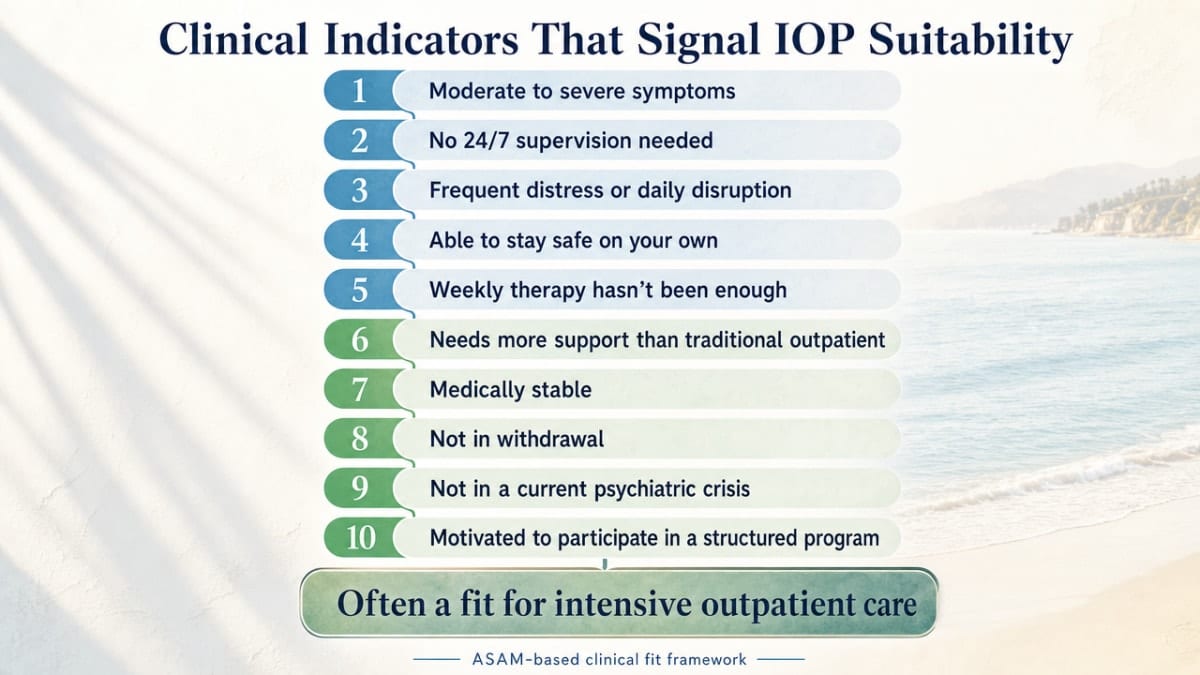
Knowing if intensive outpatient is the right step for you starts with understanding the clinical signs professionals look for. Here’s a quick assessment tool to help you gauge your fit:
IOP Clinical Suitability Assessment
- Your symptoms are moderate to severe but you do not require round-the-clock supervision.
- You’re experiencing frequent distress or disruptions in daily life, but you’re able to stay safe on your own.
- You have had repeated setbacks with weekly therapy, or need more support than traditional outpatient visits provide.
- You are medically stable and not in withdrawal or a current psychiatric crisis.
- You’re motivated to participate actively in a structured program.
Intensive outpatient is often recommended for people who need more than one-on-one therapy but do not need full hospitalization. The American Society of Addiction Medicine (ASAM) criteria help guide these decisions, taking into account your symptoms, safety, readiness to change, and living situation7. This approach works best when you’re ready to commit to several hours of therapy per week and can manage your routines in between sessions.
Clinical research confirms that intensive outpatient is effective for individuals with stable medical conditions who are struggling with substance use, mood disorders, anxiety, or trauma-related symptoms. Studies show that outcomes are comparable to inpatient care for those who meet these criteria2.
If you recognize yourself in several points above, you’re already on your way to making an informed decision. Next, let’s explore the environmental and personal factors that can further shape your readiness for this level of care.
Environmental and Personal Readiness Factors
Environmental and personal readiness can make or break your experience with intensive outpatient care. Let’s walk through a readiness checklist to help you see if your current life circumstances support success:
Personal & Environmental Readiness Checklist
- You have a safe and stable place to live, free from constant crisis or unsafe influences.
- Family, friends, or chosen support people are willing to encourage your progress.
- Your job, school, or caregiving responsibilities can flex to accommodate intensive outpatient sessions.
- Reliable transportation or access to telehealth sessions is available.
- You feel internally motivated to work on your recovery, even when it gets tough.
- There’s a willingness to set boundaries with people or situations that could disrupt your healing.
This approach works best when your environment isn’t pulling you back into old patterns. Research consistently finds that outcomes in intensive outpatient treatment are strongest for people who can return each day to supportive, stable surroundings2. If home life is unpredictable or unsupportive, it may make sense to seek additional resources or consider a higher level of care first.
Personal readiness often means being honest about your own motivation and what you’re willing to commit. Even if you’re nervous, having hope and a desire for change is a strong foundation. Choosing intensive outpatient is a brave step, but it’s one you don’t have to take alone. As you keep reading, you’ll see how this level of care can adapt to real-world demands—helping you balance treatment with all the moving parts of your life.
How Intensive Outpatient Fits Your Life
Balancing Treatment with Work and Family
Keeping up with work and family is a big concern when you’re considering intensive outpatient treatment. Here’s a decision tool to help you see how this level of care could fit your daily life:
Work & Family Balance Checklist
- Do you need to continue working, caring for children, or supporting loved ones?
- Are your responsibilities flexible enough to allow several therapy sessions per week?
- Can you identify times in your schedule that could be devoted to treatment?
- Is your support system (family, friends, coworkers) willing to help you make space for recovery?
Intensive outpatient was created for people who want to heal without stepping away from their roles at home or on the job. Research shows that intensive outpatient participants successfully maintain employment, education, and family commitments, all while getting the support they need for recovery2. This strategy suits you if you want to keep contributing at home and work, but recognize you need more structure than traditional therapy.
You might find that talking to your employer about your needs (when you feel safe doing so), or leaning on family for child care, makes a real difference in your ability to attend sessions. Even if you’re juggling a lot, remember: prioritizing your health now helps you show up more fully for those who depend on you. Next, you’ll discover how flexible scheduling and telehealth options make intensive outpatient even easier to weave into your routine.
Flexible Scheduling and Telehealth Options
If you’re looking for a treatment plan that truly fits your daily routine, flexible scheduling and telehealth options can make intensive outpatient care far more accessible. Here’s a quick assessment tool to help you picture how these features might work for you:
Flexible & Virtual Access Self-Check
- Would morning, afternoon, or evening sessions best match your schedule?
- Do you need the option to attend therapy from home or work using a secure video platform?
- Are you balancing multiple commitments—school, caregiving, or shift work—that change week to week?
- Would skipping a commute make it easier to show up consistently?
Many intensive outpatient programs now offer a range of session times and the choice of in-person or telehealth participation. This approach is ideal for people who want structure, but need flexibility to manage work, family, or health challenges. Research highlights that flexible scheduling and telehealth options have expanded access, making it possible for more people to get the care they need without sacrificing other responsibilities2.
You might find that virtual sessions reduce barriers like transportation and childcare, while evening or weekend groups let you keep up with life’s demands. Remember, every adjustment that supports your attendance is a step toward recovery. The goal is to make intensive outpatient treatment work for you, not the other way around. Up next, you’ll see how success is measured in intensive outpatient programs and what progress looks like on your path to recovery.
Expected Outcomes and Success Indicators
Understanding what to expect from intensive outpatient programs helps you set realistic goals and recognize progress along your recovery journey. While every person’s experience is unique, intensive outpatient programs follow evidence-based frameworks that produce measurable improvements when participants actively engage with treatment.
Most people entering intensive outpatient programs notice initial changes within the first two to three weeks of consistent participation. You may find yourself developing better coping strategies for managing cravings, identifying triggers more effectively, and building healthier daily routines. These early wins—like attending a family dinner without using substances, completing a full work week for the first time in months, or successfully navigating a stressful situation using new coping techniques—create momentum that supports longer-term recovery goals.
“Research indicates that approximately 78% of participants report improved emotional regulation within the first few weeks, while 85% experience reduced cravings by week three.”
Successful completion of intensive outpatient programs typically involves achieving several key milestones. You’ll demonstrate consistent attendance and participation in therapy sessions, showing commitment to your recovery process. Many participants develop the ability to navigate challenging situations without turning to substances, using tools and techniques learned during treatment. Building a support network of peers, counselors, and loved ones becomes another critical indicator of progress.
Clinical assessments throughout intensive outpatient programs track improvements in mental health symptoms, substance use patterns, and overall functioning. Your treatment team uses standardized tools such as the PHQ-9 (Patient Health Questionnaire) for depression, GAD-7 (Generalized Anxiety Disorder scale) for anxiety symptoms, and the Addiction Severity Index to monitor changes in co-occurring conditions that may have contributed to substance use. Studies show that 68% of IOP participants demonstrate clinically significant reductions in depression and anxiety scores within 8-12 weeks. These objective measurements help adjust your treatment plan to address evolving needs and celebrate meaningful progress.
Quality intensive outpatient programs also focus on practical life skills that extend beyond abstinence. You’ll work toward improved relationships with family members, better performance at work or school, and enhanced physical health. Financial stability often improves as resources previously directed toward substance use become available for other priorities. Many participants report feeling more present in their daily lives and reconnecting with interests and activities they had abandoned.
Relapse prevention planning represents a crucial outcome of intensive outpatient programs. You’ll develop personalized strategies for managing high-risk situations, recognizing warning signs, and accessing support when needed. This preparation doesn’t mean relapse won’t happen—recovery is often non-linear—but you’ll have concrete tools for responding effectively if challenges arise.
Long-term success indicators extend well beyond program completion. Research shows that individuals who complete intensive outpatient programs experience sustained improvements in quality of life, reduced substance use, and better overall health outcomes. Data indicates that 60-70% of IOP completers maintain abstinence or significantly reduced substance use at the one-year mark. Many participants transition to less intensive levels of care, such as standard outpatient therapy or support groups, maintaining the foundation built during intensive outpatient programs.
Your treatment team will work collaboratively with you to define personalized success indicators that align with your specific goals and circumstances. These might include reuniting with family, returning to work, completing educational programs, or simply experiencing consistent periods of stability and well-being. Recovery looks different for everyone, and intensive outpatient programs provide the structured support needed to achieve your individual vision of success.
Your Path Forward with Intensive Outpatient
Now that you understand what success looks like in intensive outpatient programs—the structure, the evidence-based outcomes, and the real-world results—let’s explore how to begin your own journey toward recovery. Taking this next step represents a significant commitment to your well-being, and you deserve clear guidance on exactly how to move forward.
Your path begins with specific reflection rather than overwhelming questions. Ask yourself: Can I commit to 9-12 hours of treatment per week while maintaining my job or family responsibilities? Do I have at least one person who can support my recovery journey? Am I ready to be honest about my substance use patterns, even when it feels uncomfortable? These concrete questions help you assess whether intensive outpatient treatment aligns with your current life circumstances. The flexibility of these programs exists precisely to accommodate your daily responsibilities while providing comprehensive care—you don’t have to choose between recovery and your existing commitments.
When you’re ready to reach out, preparation makes the process less daunting. Before contacting treatment providers, gather your insurance card and write down your questions. Bring a notebook to consultations—you’ll want to remember important details. Ask specifically: “What does a typical week look like in your program?” “How do you measure progress?” “What happens if I miss a session?” “Do you offer evening or weekend options?” Request their success rates and accreditation status. Most facilities offer free consultations, and you’re under no obligation during these conversations. If cost concerns are holding you back, ask directly about sliding scale fees, payment plans, or scholarship programs—many facilities have options they don’t advertise publicly.
When searching online, you can use specific terms to find the right fit. Type intensive outpatient near me or IOP for [specific condition] to narrow down your options. Perhaps you’re worried about failing again, or whether you can truly manage the time commitment alongside everything else in your life. These fears are completely normal, and they don’t predict your outcome. The evidence supporting intensive outpatient programs shows that recovery is possible when you engage with the process, and “engagement” doesn’t mean perfection—it means showing up honestly, even on difficult days. Your commitment to change, combined with professional guidance and evidence-based treatment, creates the foundation for lasting transformation. Seeking help isn’t weakness; it’s the clearest demonstration of strength you can offer yourself and those who care about you.
Frequently Asked Questions
What happens if intensive outpatient treatment isn’t working for me?
If intensive outpatient treatment isn’t working for you, it’s okay to speak up and ask for a change—your care team is there to help. Sometimes, people need a different approach, extra support, or a higher level of care like partial hospitalization or residential treatment. It’s not a setback; it’s simply about finding what best supports your healing. Intensive outpatient is most effective when your needs and safety come first, and adjustments are a normal part of the process. Research shows that adapting the treatment plan leads to better outcomes and helps you stay engaged in your recovery journey2.
Can I participate in intensive outpatient treatment if I’m taking prescription medications?
Yes, you can participate in intensive outpatient treatment while taking prescription medications. In fact, many people benefit from a combination of therapy and prescribed medication as part of their care plan. Your treatment team will work closely with you to make sure your medications are managed safely and effectively throughout the intensive outpatient process. It’s important to let your team know about all the medications you’re taking so they can coordinate your care and support your goals. Research supports integrating medication management into intensive outpatient programs to improve outcomes for mental health and substance use recovery2.
How does intensive outpatient treatment address co-occurring mental health and substance use disorders?
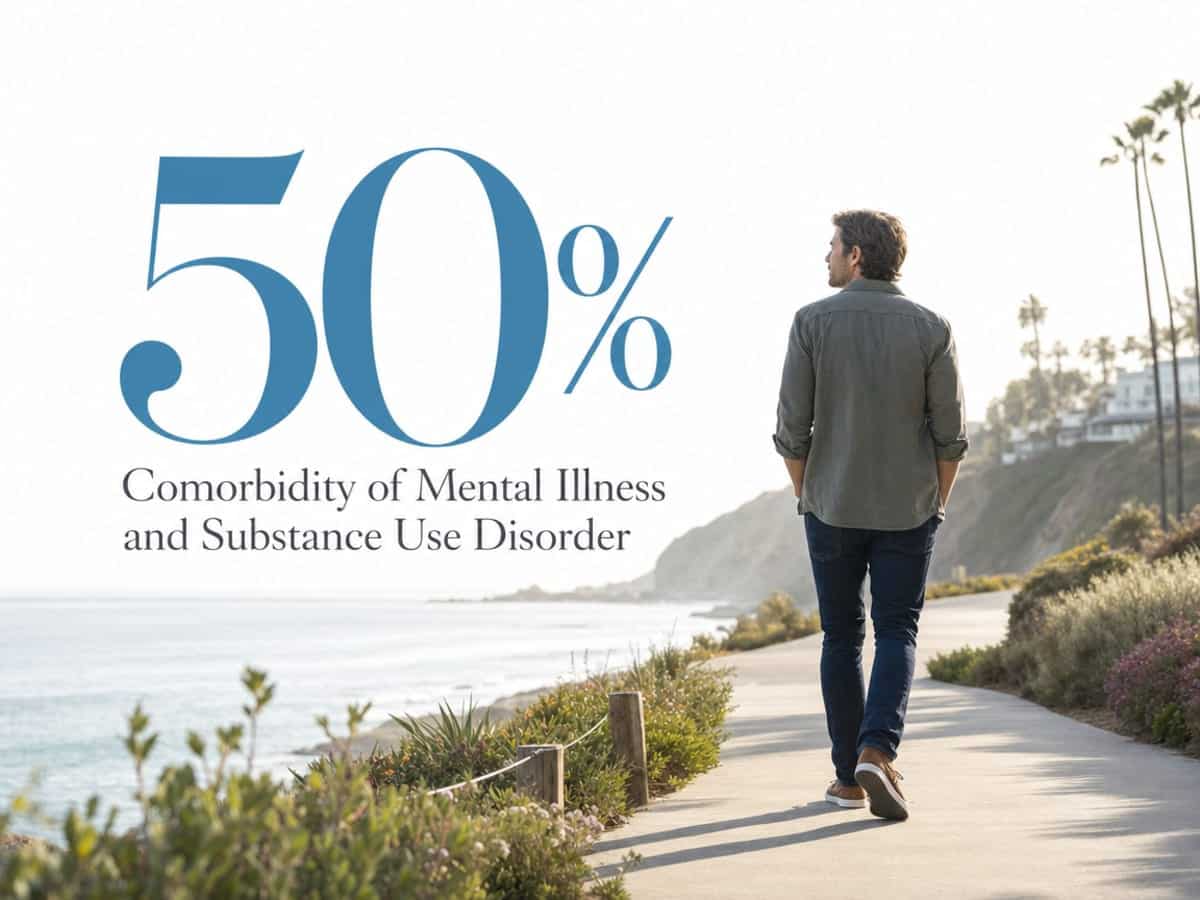
Intensive outpatient treatment is uniquely equipped to help you manage both mental health and substance use challenges at the same time. About half of all people facing a mental health diagnosis will also experience a substance use disorder at some point, so you’re not alone in needing support for both3. Intensive outpatient programs use integrated care—meaning you’ll receive therapy and support that address both sets of concerns together, not separately. This approach includes evidence-based therapies like Cognitive Behavioral Therapy (CBT), group sessions, and relapse prevention, all delivered by a team trained in dual diagnosis. By working on both issues side by side, intensive outpatient treatment helps you build coping skills, reduce relapse risk, and move toward a more stable, fulfilling life2.
Will my employer or colleagues find out I’m attending intensive outpatient treatment?
Your privacy is protected when you participate in intensive outpatient treatment, and your employer or colleagues do not have to know unless you choose to share. Treatment programs are required by law (such as HIPAA) to keep your health information confidential. If you need to adjust your work schedule for sessions, you can discuss options with your employer without disclosing specific details about intensive outpatient. Many people use personal time or request workplace accommodations for medical reasons, which do not require sharing the exact nature of care. Protecting your confidentiality is a core principle in all intensive outpatient settings2.
How long does intensive outpatient treatment typically last before I can step down to regular therapy?
Most people participate in intensive outpatient treatment for about 8 to 12 weeks, though your exact timeline may be shorter or longer depending on your needs and progress. The length of intensive outpatient is based on your goals, symptom stability, and how ready you feel to step down to regular weekly therapy. Some may transition after a month, while others benefit from staying a bit longer—your care team will help you decide what’s right for you. Research supports that a flexible approach helps people maintain their progress and reduces the risk of setbacks as you move into less frequent care2.
What is the difference between intensive outpatient treatment and partial hospitalization programs?
The main difference between intensive outpatient treatment and partial hospitalization programs (PHPs) is the amount of daily structure and supervision you receive. Intensive outpatient typically involves therapy and group sessions for a few hours, several days a week, allowing you to return home and maintain daily routines after each session. In contrast, PHPs offer a higher level of care with more hours per day (often five or more), sometimes approaching a full day of structured support. This solution fits people who need more than weekly therapy but don’t require round-the-clock monitoring. Deciding between the two depends on your symptom severity, safety needs, and home environment2.
Does insurance typically cover intensive outpatient treatment for mental health and substance use?
Many insurance plans do cover intensive outpatient treatment for mental health and substance use, thanks to mental health parity laws that require equal coverage for behavioral health and medical care. Whether you have private insurance, Medicaid, or Medicare, most plans include some form of intensive outpatient benefits, but the specifics can vary by provider and policy. It helps to call your insurer directly or ask your treatment provider’s admissions team to verify your coverage and help you understand any requirements, like prior authorization. Research from SAMHSA confirms that insurance coverage has expanded access to intensive outpatient care for many individuals seeking support2.
References
- Substance Abuse Intensive Outpatient Programs. https://pmc.ncbi.nlm.nih.gov/articles/PMC4152944/
- SAMHSA. Clinical Issues in Intensive Outpatient Treatment. https://library.samhsa.gov/sites/default/files/pep20-02-01-021.pdf
- National Center for Biotechnology Information. Common Comorbidities with Substance Use Disorders Research. https://www.ncbi.nlm.nih.gov/books/NBK551500/
- Channell, S. E. (1999). Comparing Outcome of Residential and Intensive Outpatient Treatment Services for Substance Dependence. Western Michigan University Dissertations. https://scholarworks.wmich.edu/dissertations/1497/
- Yamokoski, C. L., et al. Feasibility of an Intensive Outpatient Treatment Program for PTSD. U.S. Department of Veterans Affairs. https://www.ptsd.va.gov/professional/articles/article-pdf/id1590049.pdf
- Treatment Outcomes and Program Transition Rates Across Substance Use Disorder Treatment Settings. Institutional Repository. https://institutionalrepository.aah.org/cgi/viewcontent.cgi?article=1036&context=sciday
- ASAM. The ASAM Criteria. https://www.asam.org/asam-criteria
- Engaging High-Need Patients in Intensive Outpatient Programs. PMC. https://pmc.ncbi.nlm.nih.gov/articles/PMC6206348/
- National Center for Biotechnology Information. Addiction Relapse Prevention. https://www.ncbi.nlm.nih.gov/books/NBK571451/
- National Center for Biotechnology Information. Group Therapy. https://www.ncbi.nlm.nih.gov/books/NBK549812/