Key Takeaways
- Essential Tools: A comprehensive clinical assessment, evidence-based therapies (like CBT and DBT), and a dedicated support network.
- Step 1: Recognize the need for simultaneous care for both mental health and substance use.
- Step 2: Evaluate facilities based on accreditation, staff credentials, and therapeutic offerings.
- Step 3: Choose a flexible outpatient structure that fits your daily life and responsibilities.
- Outcome: You will successfully engage in a structured, integrated program that addresses your whole health, leading to sustainable community reintegration and improved daily functioning.
Why Integrated Addiction Center Treatment Changes Recovery Outcomes
The Dual Diagnosis Reality in Treatment Settings
Facing a dual diagnosis—when you are navigating both a mental health condition and a substance use challenge—is incredibly common. When you begin your journey in addiction center treatment, you might be surprised to learn that over 65% of individuals receiving specialized care also have a co-occurring mental health condition1. This reality means that the best environments must be prepared to recognize and treat both conditions simultaneously.
You know firsthand how symptoms can overlap. It is easy for underlying anxiety, depression, or trauma to go unnoticed if only the substance use is addressed. That is exactly why truly integrated care is such a breakthrough. It validates your entire experience and creates a safe space for all parts of your healing process.
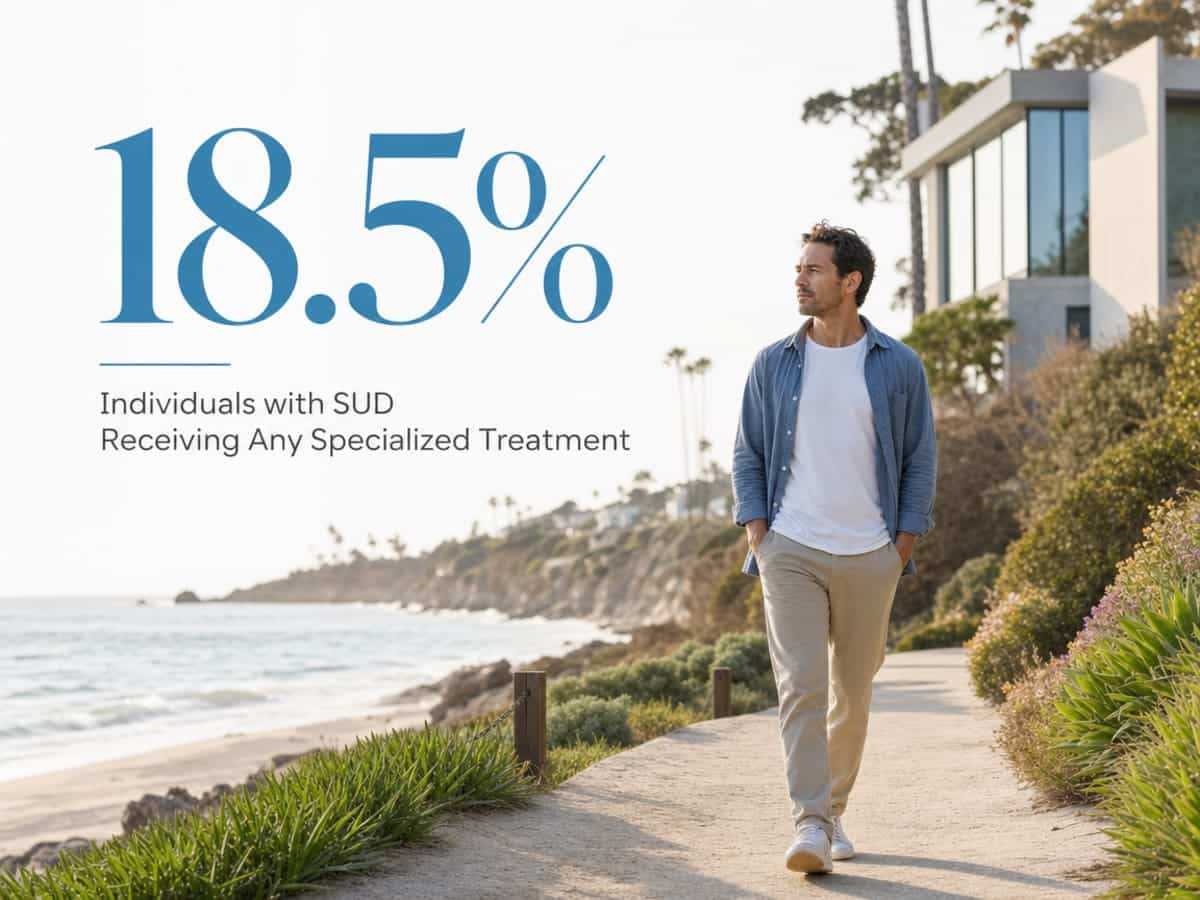
Unfortunately, only about 18.5% of people actually receive specialized care in a given year, and an even smaller fraction access programs offering true dual diagnosis support1. When you finally find an addiction center treatment program that addresses both aspects together, you are laying a rock-solid foundation for lasting recovery.
Integrated dual diagnosis programs produce higher rates of sustained recovery and lower relapse compared to treating each condition separately2.
Yes, this work is challenging, and that is completely okay. Every step you take toward integrated care is a massive win for your overall well-being. Next, we will explore what evidence-based standards set the best programs apart.
Evidence-Based Treatment Standards That Matter
You already know that not all programs are created equal. Evidence-based standards are more than just a checklist; they set the foundation for real, measurable change. Programs following these standards use therapies backed by scientific research, such as:
- Cognitive Behavioral Therapy (CBT)
- Dialectical Behavior Therapy (DBT)
- Motivational Interviewing
These approaches are proven to help you manage both mental health and substance use challenges more effectively2. Another essential standard is individualized care. Instead of a one-size-fits-all approach, top-tier addiction center treatment uses a thorough clinical assessment to match your unique needs with the right plan.
This is especially important for dual diagnosis, where symptoms can be complex. According to the American Society of Addiction Medicine, matching your care to a clinical assessment makes a real difference in your outcomes4. Here is a quick comparison of evidence-based versus non-evidence-based programs:
| Standard | Evidence-Based Program | Non-Evidence-Based Program |
|---|---|---|
| Therapy Modalities | CBT, DBT, MI, MAT | Unproven or generic methods |
| Assessment Process | Comprehensive, individualized | Minimal or generic |
| Outcome Measurement | Regular, documented | Rare or absent |
| Staff Credentials | Licensed, specialized | Varies widely |
It is completely normal to feel overwhelmed by all the options. Just remember that every time you look for these standards, you are moving closer to meaningful recovery. In the next section, we will look at the clinical capabilities that separate truly quality programs from the rest.
Clinical Capabilities That Define Quality Care
Therapeutic Modalities and Staff Credentials
Step 1: Understand the Power of the Right Therapies and Qualified Staff
When you think about what sets apart truly high-quality addiction center treatment, two factors immediately rise to the top: the therapeutic modalities offered and the credentials of the staff providing care. These elements are the backbone of effective support for anyone facing co-occurring challenges.
Programs rooted in evidence-based therapies consistently show better outcomes. They help you break patterns of harmful thinking, build new coping skills, and strengthen your motivation. Research confirms that when these therapies are delivered by trained professionals, your chances for long-term success greatly improve2. Even when things feel stuck or progress seems slow, every session grounded in these methods is a win.
Equally important is the training of the staff. Look for centers where therapists and clinical staff hold licenses in their fields. Programs with board-certified clinicians promote stronger outcomes. According to industry standards, the best environments require multidisciplinary teamwork6.
When researching facilities online, you can often use search filters to find credentialed staff. For example, try pressing Ctrl + F on a facility’s staff page and typing LMFT or DBT certified to quickly locate specialized professionals.
| Key Capability | What to Look For |
|---|---|
| Therapy Modalities | CBT, DBT, motivational interviewing, trauma therapy |
| Staff Credentials | Licensed clinicians, addiction or mental health specialty, ongoing training |
Yes, managing these standards can feel overwhelming, but each step toward finding this level of care is progress. Next, we will explore the role of psychiatric services and medication management in integrated treatment.
Psychiatric Services and Medication Management
Step 2: Prioritize Integrated Psychiatric Services and Medication Management
When you are searching for the highest quality addiction center treatment, it is essential to focus on programs that provide robust psychiatric services alongside medication management. Why? Because effective recovery hinges on addressing the full scope of your symptoms—emotional, psychological, and physical—all at once.
Integrated psychiatric care means that board-certified psychiatrists are part of your team. They conduct thorough evaluations to identify underlying conditions like depression, anxiety, or bipolar disorder. When these professionals are involved, you are not left guessing about the origins of your distress. Every diagnosis is based on current clinical guidelines, reducing the risk of dangerous interactions8.
Medication management is much more than simply writing prescriptions. It includes regular follow-ups and collaboration with your therapists. Programs that offer Medication-Assisted Treatment (MAT) combined with psychiatric support have shown to improve retention and decrease relapse rates2, 10.
| Service Feature | Why It Matters |
|---|---|
| Psychiatric Evaluation | Ensures accurate diagnosis and targeted treatment |
| Medication Management | Reduces risks, maximizes benefit, supports lasting recovery |
| MAT Integration | Boosts success rates for opioid/alcohol use disorders |
| Ongoing Monitoring | Quickly addresses changes or complications |
It is okay if this feels like a lot to take in. Progress happens one thoughtful choice at a time. Next, you will discover how accreditation and licensing help verify a program’s commitment to quality.
Accreditation and Licensing as Quality Indicators
What CARF and State Licensing Actually Verify
Step 3: Verify CARF and State Licensing
When you are navigating your addiction center treatment options, knowing what accreditation really means can make the decision much less daunting. Accreditation by the Commission on Accreditation of Rehabilitation Facilities (CARF) signals that a program meets rigorous standards.
CARF does not just hand out its seal; programs must demonstrate evidence-based practices and a commitment to tracking outcomes3. This helps ensure you are not walking into a facility that simply checks the box, but one genuinely invested in your results.
State licensing is another crucial layer of accountability. Licensed centers must follow strict state regulations for safety and ethical conduct. These requirements help protect you from substandard care. Both CARF accreditation and state licensing require regular reviews and site visits.
| Standard | CARF Accreditation | State Licensing |
|---|---|---|
| Evidence-Based Care | Required | Sometimes required |
| Outcome Measurement | Required and monitored | Varies by state |
| Staff Credentials | Licensed, ongoing education | Minimum requirements |
| Safety & Ethics | Strict protocols | Mandated by law |
| Frequency of Review | Every 1–3 years | Annual or as required |
Yes, all these checks might feel overwhelming, but each one is a step toward safer, more reliable care. Next, let’s talk about how insurance networks can open doors to accessible care.
Insurance Networks and Treatment Accessibility
Step 4: Understand Insurance Networks
Insurance coverage plays a huge role in making quality addiction center treatment actually reachable. Many people hesitate to seek help because they worry about whether their insurance will cover the care they need. This is a real barrier, and you are not alone in facing it.
The good news is that more insurance networks are partnering with programs that meet high standards for integrated care3. Insurance networks decide which centers they will contract with based on clinical quality and the ability to measure results.
Being in-network means you can access services with less administrative hassle. Out-of-network programs often lead to delays or unexpected bills, which can be discouraging. Let’s compare the accessibility differences:
| Feature | In-Network Center | Out-of-Network Center |
|---|---|---|
| Insurance Coverage | Typically full or partial | Often limited or denied |
| Out-of-Pocket Costs | Lower | Higher |
| Approval Time | Faster, pre-approved | Slower, more paperwork |
| Continuity of Care | Easier to coordinate | Greater risk of disruption |
Navigating insurance can feel overwhelming, but every call and every question counts. You are moving closer to accessible, high-quality care. Next, you will see how flexible program structures help you fit recovery into your life.
Program Structure and Flexibility for Real Life
Outpatient Levels of Care and Their Applications
Step 5: Choose the Right Outpatient Level of Care
When it comes to making addiction center treatment work for your real life, outpatient levels of care stand out for their flexibility. You already know that not everyone can step away from work, school, or family for weeks at a time.
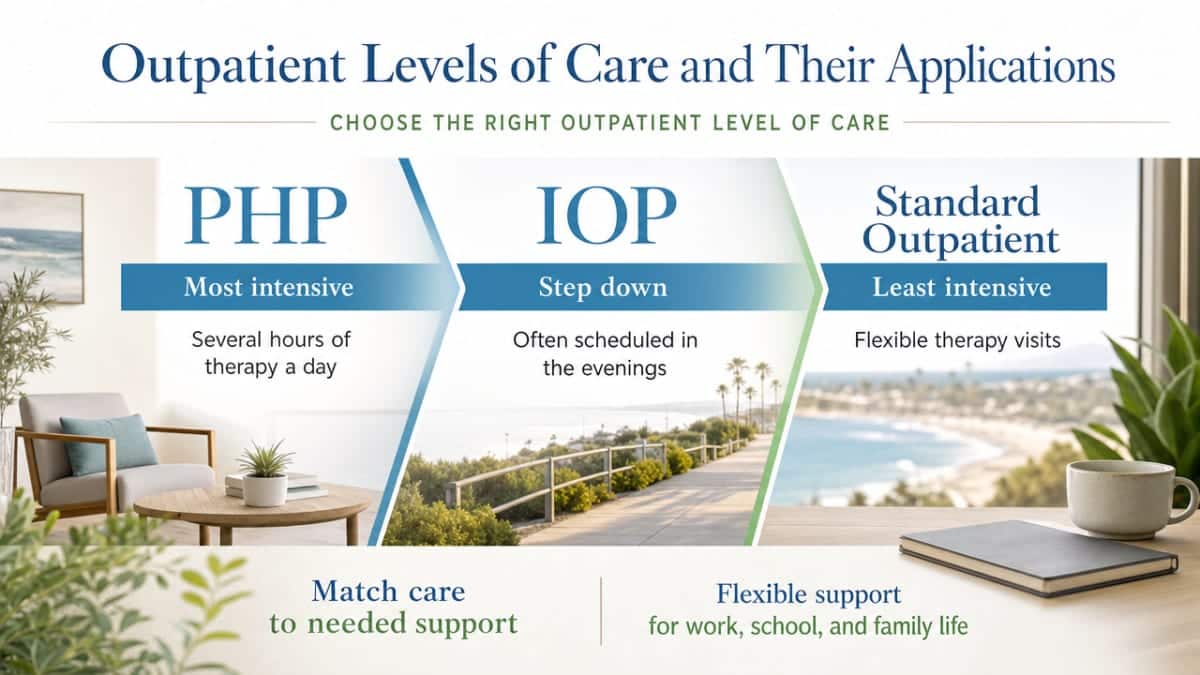
Outpatient programs are designed with this reality in mind, offering different levels of intensity based on what you need. This means you can match your care to the right level of support without asking you to put everything else on hold. The main outpatient levels typically include Partial Hospitalization Programs (PHP), Intensive Outpatient Programs (IOP), and standard outpatient therapy.
PHP is the most intensive, usually involving several hours of therapy a day. IOP offers a step down, with sessions often scheduled in the evenings. Standard outpatient care provides ongoing support with weekly therapy. Studies show that matching the right level to your clinical needs leads to better outcomes4.
| Level of Care | Intensity | Typical Schedule | Best For |
|---|---|---|---|
| PHP | High | 5 days/week, 4–6 hours/day | Severe symptoms, strong support |
| IOP | Moderate | 3–5 days/week, 2–3 hours/day | Balancing treatment and life |
| Outpatient Therapy | Low | 1–2 times/week, 1 hour/session | Maintenance, relapse prevention |
Finding the right fit can be a challenge, but every adjustment is a step forward. Up next, we will walk through how aftercare and community support help you stay connected and keep growing.
Aftercare Planning and Community Reintegration
Step 6: Plan for Aftercare and Community Reintegration
Supporting you through formal addiction center treatment is only the beginning. The real growth often starts as you transition back to daily life. That is where strong aftercare planning comes in.
Your path is unique, so your aftercare plan should reflect your personal strengths and goals. Reliable programs start discharge planning early. Research shows that sustained engagement in aftercare—such as regular therapy sessions or alumni programs—reduces relapse rates2, 6.
Community reintegration is about more than just returning home; it means rebuilding relationships and finding purpose. Programs that actively connect you to community organizations and peer networks set you up for lasting success.
Click here to see key aftercare and reintegration supports
- Ongoing Therapy: Emotional support & skill reinforcement
- Peer Groups: Accountability and shared experience
- Medication Management: Stability and relapse prevention
- Vocational Help: Purpose and structure
- Community Resources: Connection and belonging
Returning to life outside treatment has its hard days, but every resource you build is a win. Next, we will discuss how to find integrated treatment options that truly fit your needs.
Finding Integrated Addiction Center Treatment That Fits Your Needs
When you are dealing with both mental health challenges and substance use, finding the right support can feel overwhelming. You deserve care that sees the whole picture—not treatment that addresses one issue while ignoring the other. Integrated treatment brings everything together in one place, with professionals who understand how these conditions affect each other.
Start by looking for programs that offer comprehensive assessments. You need a team that takes time to understand your specific situation, not a one-size-fits-all approach. The best programs create personalized plans that address your unique needs, whether that includes therapy, medication management, or skill-building support.
Consider what level of care fits your life right now. Some people benefit from intensive daily programs, while others do well with evening options that allow them to maintain work or family responsibilities. There is no wrong choice—just what works for you at this moment.
To give you an idea of what a structured day might look like, here is a sample schedule for an Intensive Outpatient Program:
9:00 AM - 10:00 AM: Check-in and Mindfulness Group
10:00 AM - 11:00 AM: Cognitive Behavioral Therapy (CBT) Session
11:00 AM - 12:00 PM: Relapse Prevention Education
12:00 PM - 1:00 PM: Lunch Break
1:00 PM - 2:00 PM: Individual Counseling / Medication Management
Do not hesitate to ask questions about treatment approaches. Programs using evidence-based therapies like CBT, DBT, and trauma-focused interventions have strong track records. You are taking an important step by exploring your options, and finding the right fit makes all the difference in your recovery journey. If you are looking for a compassionate partner in this journey, 449 Recovery provides the comprehensive, person-centered care you deserve.
Frequently Asked Questions
How long does outpatient treatment typically last for co-occurring disorders?
Outpatient addiction center treatment for co-occurring mental health and substance use disorders typically lasts anywhere from a few months to a year, but the exact timeline depends on each client’s needs and progress. Many people start with more intensive programs, like Partial Hospitalization (PHP) or Intensive Outpatient (IOP), which might run three to five days a week for several weeks or months. After that, ongoing outpatient therapy and aftercare support help maintain momentum. Research shows that longer engagement—at least 90 days—leads to better outcomes for dual diagnosis clients, though some benefit from extended care beyond that window 2. Yes, it’s a big commitment, but every week of participation helps build a stronger foundation for recovery.
What happens if my mental health symptoms worsen during substance use treatment?
If your mental health symptoms worsen during substance use treatment, it’s a sign your care plan needs adjustment—not a failure on your part. Integrated addiction center treatment is designed to respond to these changes, so let your clinical team know right away. They can reassess your needs, coordinate with psychiatric providers, and update your therapy or medication plan as needed. This flexibility helps address both conditions together and prevents one from undermining the other 2. It’s normal to hit rough patches—every time you speak up or ask for support, you’re taking a powerful step toward lasting recovery.
Can I continue working while attending an intensive outpatient program?
Yes, you can usually continue working while participating in an intensive outpatient program (IOP) as part of addiction center treatment. IOPs are designed with flexibility, often offering sessions in the mornings, evenings, or on weekends so you can maintain your job and other responsibilities. Many professionals find that this structure allows them to receive focused clinical support for co-occurring mental health and substance use challenges without stepping away from their careers. If your work schedule is unpredictable or demanding, most programs will help you create a plan that fits your needs. Research shows that maintaining normal routines, like work, can actually boost recovery and support long-term progress 2. Every adjustment you make to balance work and treatment is a step forward.
How do treatment centers measure whether their programs are actually working?
Treatment centers measure effectiveness using a mix of clinical outcomes, client feedback, and ongoing progress tracking. Most quality addiction center treatment programs regularly assess symptom reduction, substance use patterns, and mental health status through standardized tools and self-reported surveys. Many programs also track long-term engagement in aftercare, relapse rates, employment, and quality of life improvements. Accreditation agencies like CARF require centers to collect and review these outcome metrics as a condition for maintaining their status 3. While it can feel overwhelming to keep up with all this data, every measurement is a chance to celebrate progress and catch issues early—helping you and your clients move forward with confidence.
What’s the difference between treating conditions sequentially versus simultaneously?
Treating conditions sequentially means addressing a mental health disorder and a substance use disorder one after the other—often starting with getting sober before working on mental health. In contrast, treating both simultaneously means tackling both issues at the same time, using integrated therapies and coordinated care. Research shows that simultaneous, integrated addiction center treatment leads to better long-term recovery and lower relapse rates for people with co-occurring disorders than treating each condition separately 2. Yes, this approach can be more complex, but every step toward integration is a step toward true healing. You’re not alone—integrated care supports the whole person, not just symptoms.
Should family members be involved in dual diagnosis treatment?
Yes, involving family members in dual diagnosis treatment is often a powerful support—and sometimes even a necessity. Addiction center treatment research consistently shows that when families participate in therapy, education, and planning, clients experience lower relapse rates and improved mental health outcomes 2. Family involvement can help address misunderstandings about mental illness and substance use, rebuild trust, and strengthen the support network at home. It also gives loved ones a chance to learn healthier ways to communicate and respond during challenging moments. You might notice that families sometimes struggle with their own feelings of guilt or frustration, but every effort to stay involved, attend sessions, or simply listen is meaningful. Even small steps forward—like participating in a family group or asking questions—can make a big difference in long-term recovery.
References
- Substance Abuse and Mental Health Services Administration (SAMHSA). https://www.samhsa.gov/
- National Institute on Drug Abuse (NIDA). https://www.nida.nih.gov/
- Commission on Accreditation of Rehabilitation Facilities (CARF International). https://www.carf.org/
- American Society of Addiction Medicine (ASAM). https://www.asam.org/
- National Institute of Mental Health (NIMH). https://www.nimh.nih.gov/
- National Association of Addiction Treatment Providers (NAATP). https://www.naatp.org/
- PubMed (National Library of Medicine). https://pubmed.ncbi.nlm.nih.gov/
- American Psychiatric Association (APA). https://www.psychiatry.org/
- The Joint Commission (Healthcare Accreditation). https://www.jointcommission.org/
- CDC: Substance Use & Health. https://www.cdc.gov/substanceusehealth/