449 Recovery is a leading dual diagnosis treatment center in Orange County, providing specialized care for individuals struggling with both substance use disorders and mental health conditions. Located in Mission Viejo, California, our treatment programs are designed to address the complex relationship between addiction and mental health.
Many individuals living with addiction are also facing conditions such as anxiety, depression, trauma, or mood disorders. When these conditions occur together, they are known as co-occurring disorders, and effective treatment must address both at the same time.
At 449 Recovery, our clinical team provides integrated dual diagnosis treatment in Mission Viejo that combines evidence-based therapy, psychiatric care, and personalized treatment planning. By treating both the mental health condition and the substance use disorder simultaneously, we help clients build a stronger foundation for long-term recovery.
Our CARF-accredited and DHCS-licensed programs focus on helping individuals stabilize their mental health, overcome substance dependence, and develop the skills needed to maintain lasting wellness.

Dual diagnosis treatment is a specialized approach to care for individuals who are experiencing both a mental health disorder and a substance use disorder.
These conditions often influence one another. For example, someone struggling with depression may use alcohol or drugs to cope with emotional pain, while substance use can worsen existing mental health symptoms or trigger new psychiatric conditions. Self-medication can mask symptoms, delay treatment, and increase the risk of dependency.
At a dual diagnosis treatment center in Orange County, the goal is to treat both conditions together through coordinated clinical care.
Dual diagnosis treatment may include:
- Individual therapy
- Group therapy
- Psychiatric evaluation and medication management
- Relapse prevention planning
- Family counseling
- Stress management
- Holistic practices
- Evidence-based treatment
Managing emotional challenges and withdrawal symptoms is a key part of the recovery process, with personalized care plans to support both physical and emotional well-being. Diagnosis of co-occurring disorders should be made by a healthcare professional using DSM-5 criteria. The Integrated Treatment Model involves a single team of psychiatrists, counselors, and therapists managing both substance use and mental health conditions concurrently. Behavioral therapies are commonly used in the treatment of co-occurring disorders to improve overall functioning.
By addressing both disorders simultaneously, individuals have a greater opportunity to achieve long-term stability and avoid relapse.
Common Co-Occurring Disorders
Many different mental health conditions can occur alongside substance use disorders. Some of the most common co-occurring disorders treated at our dual diagnosis treatment center in Mission Viejo include:
Individuals struggling with depression may turn to alcohol as a way to temporarily relieve emotional pain, but alcohol can worsen depressive symptoms over time.
People experiencing chronic anxiety may misuse drugs or alcohol in an attempt to calm overwhelming feelings of fear or stress.
Individuals with trauma or post-traumatic stress disorder may use opioids or other substances to numb emotional distress.
Mood instability associated with bipolar disorder can increase the risk of substance misuse during both manic and depressive episodes.
Impulsivity and difficulty regulating behavior can make individuals with ADHD more vulnerable to substance misuse.
Conditions such as borderline personality disorder can increase the likelihood of substance use due to emotional dysregulation and difficulty managing distress.
Treating both conditions together allows clinicians to develop a comprehensive recovery plan that addresses the full picture of a person’s mental health and addiction challenges.
Why Integrated Dual Diagnosis Treatment Matters

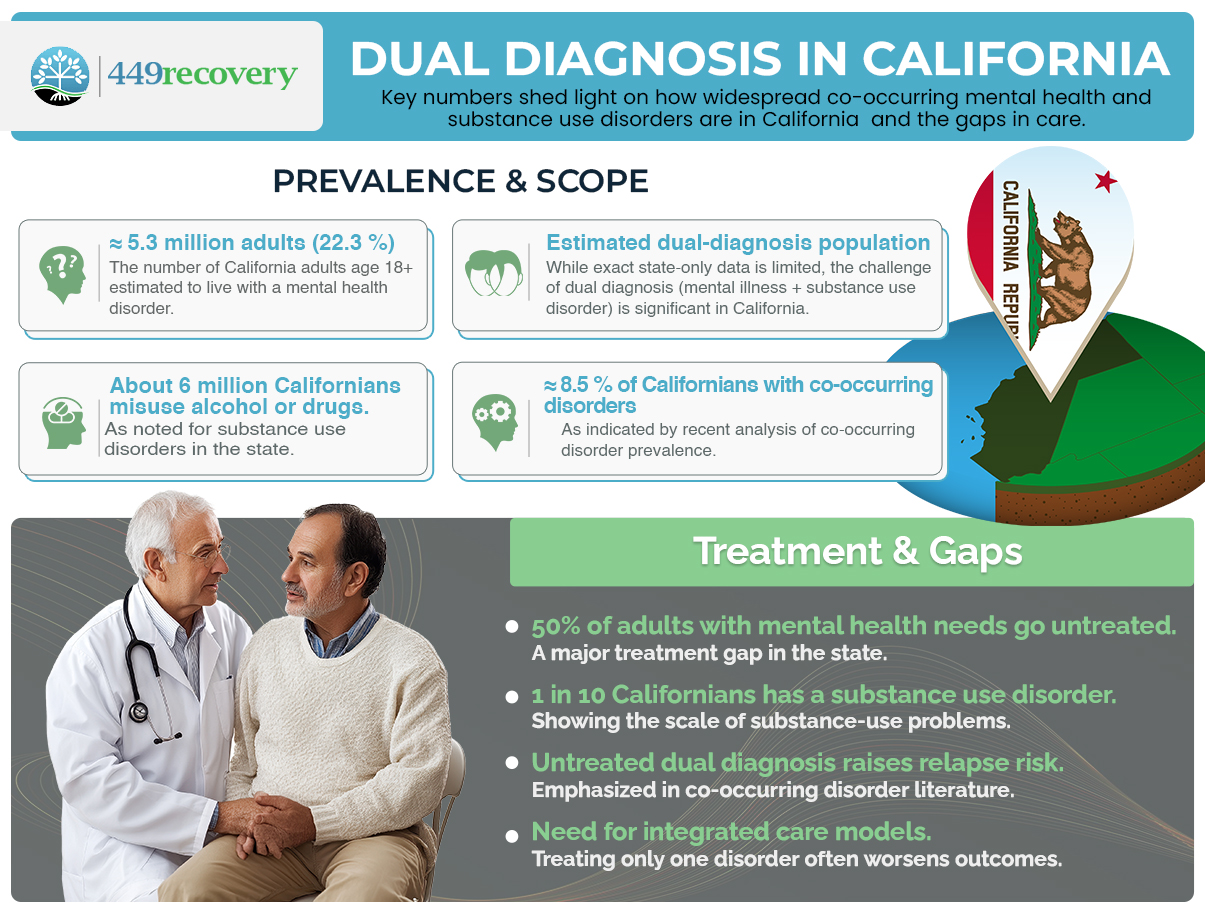
Without treating both conditions together, individuals with co-occurring disorders may struggle to achieve lasting recovery. Substance use disorders and mental health conditions often interact in complex ways, with each condition influencing the other. For this reason, treating both disorders concurrently through an integrated treatment approach is considered the standard of care for dual diagnosis treatment.
When only one condition is addressed, the other may continue to worsen. For example, if addiction is treated but the underlying mental health condition remains untreated, individuals may return to substance use in an attempt to cope with symptoms such as anxiety, depression, trauma, or mood instability. Likewise, untreated substance use can interfere with the effectiveness of mental health treatment and make symptoms more difficult to manage.
At a dual diagnosis treatment center in Orange County, integrated care focuses on understanding how these conditions influence one another and developing a treatment plan that addresses the whole person. Instead of treating mental health and addiction as separate issues, clinicians work collaboratively to provide coordinated care that supports both emotional wellness and sustained sobriety.
Integrated treatment offers several important benefits:
Therapy and psychiatric care help individuals manage symptoms such as anxiety, depression, and trauma.
Addressing the emotional triggers behind substance use reduces the likelihood of relapse.
Clinicians can tailor treatment to each individual’s specific diagnoses and needs.
Treating both conditions together improves overall recovery success rates. Ongoing assistance and comprehensive care are essential to support long-term recovery, helping individuals maintain sobriety and emotional well-being beyond initial treatment.
Evidence-Based Therapies Used in Dual Diagnosis Treatment
At 449 Recovery, dual diagnosis treatment is guided by evidence-based therapies that help individuals understand the relationship between mental health and substance use.
Common therapies used in dual diagnosis treatment include:
Cognitive Behavioral Therapy (CBT)
CBT helps individuals identify unhealthy thought patterns that contribute to both substance use and mental health symptoms.
Dialectical Behavior Therapy (DBT)
DBT focuses on emotional regulation, distress tolerance, and interpersonal skills—important tools for individuals living with co-occurring disorders.
Trauma-Informed Therapy
Many individuals with substance use disorders have experienced trauma. Trauma-informed therapy helps clients safely process these experiences while building resilience.
Motivational Interviewing
Motivational interviewing helps individuals strengthen internal motivation for recovery and build confidence in their ability to change.
These therapies work together to address the psychological, emotional, and behavioral components of co-occurring disorders.

Contact 449 Recovery Today!
Find The Help You Need By Reaching Out To Us Today!
Dual Diagnosis Programs in Mission Viejo
449 Recovery offers structured outpatient programs designed to support individuals with co-occurring disorders while allowing them to remain connected to their home, family, and community. Our dual diagnosis treatment programs in Mission Viejo provide integrated care that addresses both substance use and underlying mental health conditions.
Our Partial Hospitalization Program provides structured clinical care several hours per day while allowing clients to return home in the evenings. This level of care offers intensive therapy and psychiatric support for individuals who need more structure than traditional outpatient treatment.
PHP helps individuals stabilize symptoms, build coping skills, and begin addressing both substance use and mental health conditions in a supportive clinical environment.
PHP typically includes:
- individual therapy
- group therapy
- psychiatric care and medication management
- trauma-informed therapy
- relapse prevention education
- life skills training
This level of care is often recommended for individuals who need intensive treatment but do not require residential care.
Our outpatient dual diagnosis program provides continued therapeutic support for individuals transitioning from a higher level of care or those who need a flexible treatment option. This level of care allows clients to receive structured clinical support while maintaining responsibilities such as work, school, or family life.
Outpatient treatment focuses on helping individuals manage both substance use and underlying mental health conditions through ongoing therapy and clinical guidance. Clients participate in individual and group therapy sessions designed to strengthen coping skills, improve emotional regulation, and support long-term recovery.
At our dual diagnosis treatment center in Mission Viejo, outpatient care helps individuals continue building recovery skills while applying them in their everyday lives with consistent therapeutic support.
For individuals who need additional flexibility, 449 Recovery also offers an Evening Intensive Outpatient Program (IOP) in Mission Viejo, serving clients throughout Orange County. This program provides structured therapy sessions during evening hours, allowing clients to continue working, attending school, or caring for family members during the day.
Evening IOP typically includes evidence-based therapies such as CBT, DBT, and mindfulness practices while providing the same level of structured support found in daytime outpatient programs.
At our dual diagnosis treatment center in Mission Viejo, outpatient and evening programs help individuals strengthen recovery skills while applying them in real-world environments with ongoing clinical support.
Dual Diagnosis Treatment Options in Orange County
449 Recovery proudly serves individuals throughout Mission Viejo and Orange County, providing specialized care for those struggling with addiction and mental health disorders.
Many of our clients travel from nearby communities such as:
- Laguna Hills
- Lake Forest
- Rancho Santa Margarita
- Irvine
- Newport Beach
- San Clemente
Our Mission Viejo dual diagnosis treatment center offers a supportive environment where individuals can focus on healing while remaining connected to their families and support systems.

Signs You May Need Dual Diagnosis Treatment
Some individuals may not realize they are experiencing co-occurring disorders. Signs that dual diagnosis treatment may be helpful include:
- using drugs or alcohol to cope with emotional distress
- worsening mental health symptoms during substance use
- difficulty managing anxiety, depression, or trauma while sober
- frequent relapse after addiction treatment
- mood instability or behavioral changes related to substance use
A professional assessment can help determine whether dual diagnosis treatment is the most appropriate path toward recovery.
Start Dual Diagnosis Treatment in Mission Viejo
If you or someone you love is struggling with both addiction and mental health challenges, help is available.
At 449 Recovery, our experienced clinical team provides dual diagnosis treatment in Mission Viejo and Orange County designed to support long-term healing and recovery.
Contact 449 Recovery today to learn more about our treatment programs or verify your insurance coverage.
Recovery is possible, and the right treatment can help you build a healthier future.
Frequently Asked Questions About Dual Diagnosis Treatment
Dual diagnosis treatment addresses both mental health disorders and substance use disorders at the same time. Treating both conditions together helps individuals achieve more stable, long-term recovery.
Individuals who experience both addiction and mental health conditions such as anxiety, depression, trauma, or bipolar disorder may benefit from dual diagnosis treatment.
Yes. Traditional addiction treatment may focus primarily on substance use, while dual diagnosis treatment addresses both addiction and the underlying mental health condition through integrated care.

Dr. Sharif is a Licensed Marriage and Family Therapist who joined 449 Recovery in 2020 and oversees clinical operations as the Chief Clinical Officer. He earned his B.A. in Psychology and M.S. in Clinical Psychology from Vanguard University and completed his Doctor of Psychology from California School of Professional Psychology. Since 2011, Dr. Sharif has been dedicated to helping individuals, couples, and families heal from co-occurring disorders, including mental health, relational, and substance use challenges. He has led workshops on family dynamics, attachment injuries, spirituality in sobriety, and the impact of trauma on relationships.