Key Takeaways
Tools & Prerequisites:
- A clear list of your daily work and family obligations.
- Details regarding your health insurance coverage.
- A stable home environment free from substance use triggers.
- A support network of family or friends.
Steps to Decision:
- Assess your daily schedule to see if evening hours are free.
- Evaluate the severity of your symptoms to ensure IOP is the right level of care.
- Confirm your support system can accommodate evening sessions.
- Review practical logistics like transport and costs.
Final Outcome: You will be able to confidently determine if an evening IOP provides the right balance of structure and flexibility for your recovery journey.
Understanding Evening IOP Programs
An evening IOP (Intensive Outpatient Program) provides structured addiction treatment during after-work hours, typically between 5:00 PM and 9:00 PM. These programs offer the same comprehensive care as traditional daytime treatment while accommodating work schedules, family responsibilities, and educational commitments. This treatment format generally meets three to five times per week, with each session lasting approximately three hours.
The structure of these after-hours sessions includes evidence-based therapies such as group counseling, individual therapy sessions, relapse prevention education, and skills development workshops. Participants work with licensed clinicians who specialize in substance use disorders, receiving personalized treatment plans that address their unique recovery needs. This flexible scheduling model maintains the clinical rigor required for effective treatment while offering availability that daytime options cannot provide.
“Evening treatment creates a therapeutic environment where participants connect with peers facing similar challenges, building a recovery community that extends beyond scheduled sessions.”
These programs serve individuals who need more support than traditional weekly therapy but do not require 24-hour medical supervision. The after-work schedule allows individuals to maintain employment, fulfill family obligations, and preserve daily routines while actively engaging in recovery work. This integration of clinical care into everyday life helps participants develop practical skills for managing triggers and maintaining sobriety in real-world situations.
What Makes Evening IOP Different
What sets an evening IOP apart is how it fits into the lives of people who need treatment but cannot pause their daily responsibilities. Unlike inpatient or residential programs that require time away from home, evening sessions are scheduled after typical work or school hours. This means participants can access group therapy, individual counseling, and skills training without missing important daytime commitments.
Many people find evening IOP appealing because it encourages ongoing connection to their families, jobs, and communities while still receiving structured care. Research shows that for those who do not require constant supervision, this format can be just as effective as more intensive programs in supporting recovery goals4. The addition of virtual or hybrid formats in many areas further increases flexibility, making it easier to access help even with transportation or scheduling challenges.
Who Benefits Most from Evening Treatment
Evening treatment programs are especially helpful for individuals who have mild-to-moderate symptoms, a stable home environment, and daytime demands that prevent them from attending traditional sessions. This includes working adults, college students, parents, and caregivers who need flexibility to maintain their responsibilities while receiving structured support.
People with co-occurring mental health and substance use conditions often benefit from the integrated approach offered by evening IOP, as combined treatment has been shown to result in positive outcomes for about 50% of these participants2. Family involvement, which is often encouraged in these programs, can further improve retention in care and lower relapse rates for many individuals2.
Step 1: Assess Your Schedule for Evening IOP
Before exploring evening IOP options, take an honest inventory of the commitments that fill your days. This assessment helps determine whether a late-day schedule aligns with your current lifestyle and responsibilities. Start by mapping out your weekday obligations to see where treatment fits.
Ask yourself the following questions to gauge your availability:
- Are you working full-time or attending school during the day?
- Do you have childcare needs during late-afternoon hours?
- Can family members or friends provide transportation to sessions?
- Do you have the energy to engage in therapy after a full work day?
Evaluate your energy levels throughout the day as well. Some people find they are more mentally engaged and receptive to treatment after completing their daytime responsibilities, while others may feel depleted. This self-awareness helps you determine if after-work treatment will support your recovery goals or if another schedule might serve you better.
Evaluating Work and Career Obligations
When considering an evening IOP, it is important to take a close look at your work or career obligations. Start by examining your typical work hours, commute, and any after-hours responsibilities you might have, such as meetings or shift changes. Many people initially assume they will not be able to participate in treatment without missing work, but these programs are designed to fit around standard workdays4.
Research shows that individuals who can consistently participate in evening IOP while maintaining work responsibilities have strong outcomes, as ongoing employment is linked to stability and improved well-being during recovery3. Taking a realistic inventory of your work life can help clarify if this approach is a practical fit for your needs.
Balancing Family Responsibilities
Balancing family responsibilities is a key part of deciding if evening IOP can fit into your life. Many people worry about missing out on family dinners, helping children with homework, or caring for loved ones during the evening hours. Planning ahead and communicating with your household can make a big difference.
Research shows that involving family in the recovery process not only helps with scheduling but also improves treatment retention by up to 50% and lowers the risk of relapse by 25-30%2. That is why many programs encourage family participation, such as attending educational sessions or joining support groups. You may also want to discuss transportation needs or arrange for childcare during session times.

Step 2: Evaluate Your Symptom Severity
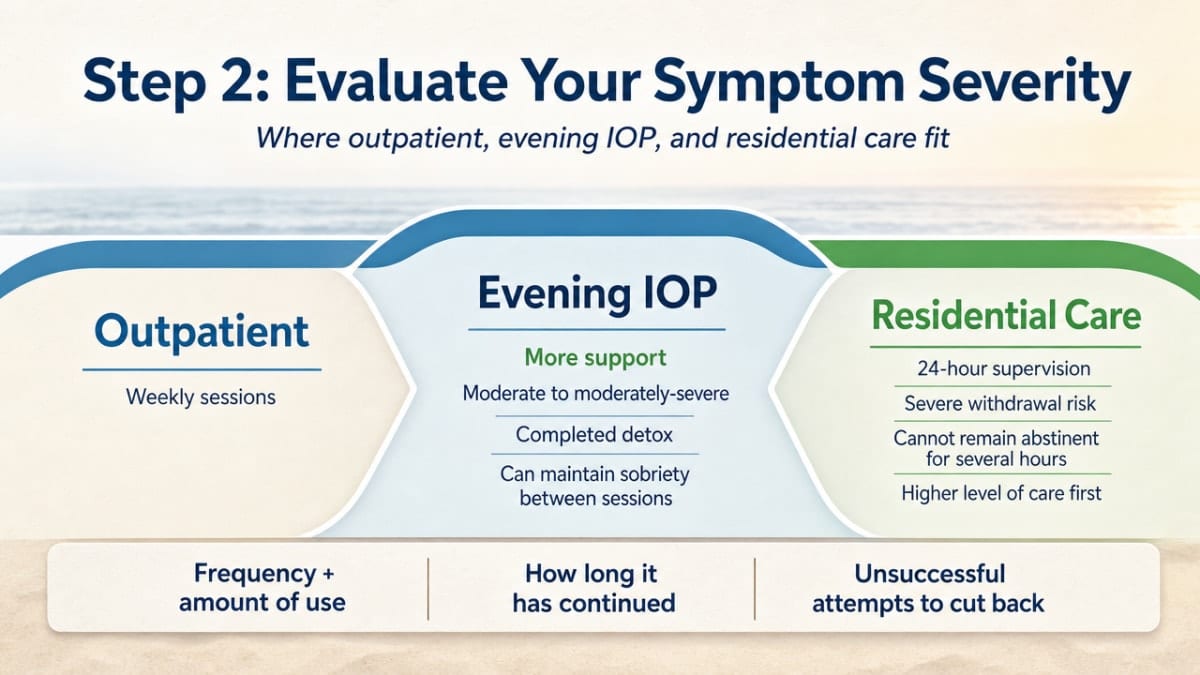
Understanding the level of care needed plays a crucial role in determining whether an evening IOP provides the right treatment intensity. IOP sits between standard outpatient therapy and residential treatment, offering structured support for those who need more than weekly sessions but do not require 24-hour supervision.
For substance use severity, consider the frequency and amount of use, how long the pattern has continued, and whether previous attempts to cut back have been unsuccessful. Evening IOP works well for individuals with moderate to moderately-severe substance use disorders who have completed detox and can maintain sobriety between sessions. If there is active severe withdrawal risk or inability to remain abstinent for several hours, a higher level of care may be necessary first.
| Factor | Evening IOP Suitability | Residential Care Suitability |
|---|---|---|
| Withdrawal Risk | Post-detox; no active medical risk. | Active withdrawal requiring medical monitoring. |
| Home Environment | Stable, supportive, substance-free. | High-risk, unstable, or enabling environment. |
| Daily Functioning | Able to work/attend school during the day. | Unable to manage daily tasks or safety. |
Be honest with treatment providers about the full picture—substance use patterns, mental health symptoms, living environment stability, and support systems. Assessment professionals can determine whether evening IOP offers sufficient structure and clinical intervention for individual circumstances.
Determining Treatment Intensity Needs
Determining the right level of care is an important part of deciding whether an evening IOP fits your needs. Many people initially assume that only severe symptoms require structured treatment, but these programs are designed for those whose symptoms are significant enough to disrupt daily life, yet not so severe as to require 24-hour supervision7.
It can help to compare your experiences to some common signs that suggest a need for more intensive care. These include frequent crises, inability to maintain safety, or serious withdrawal symptoms. If these are present, inpatient or residential treatment might be a better fit. In contrast, individuals with mild-to-moderate symptoms who want frequent support and skills-building find evening IOP effective and manageable within their routines4.
Recognizing Co-Occurring Conditions
Recognizing co-occurring conditions—when mental health concerns and substance use challenges happen at the same time—is a key step in deciding if an evening IOP is right for you. Many people initially assume these issues must be treated separately, but research shows that integrated care, which addresses both at once, leads to much better outcomes2.
Programs often specialize in dual diagnosis care, meaning they have clinicians trained to help with both mental health and substance use. For about 50% of people with co-occurring conditions, this combined approach leads to meaningful improvement2. You might notice that certain triggers, stressors, or life changes affect both areas at once—making it especially important to receive coordinated, compassionate support.
Step 3: Consider Your Support System
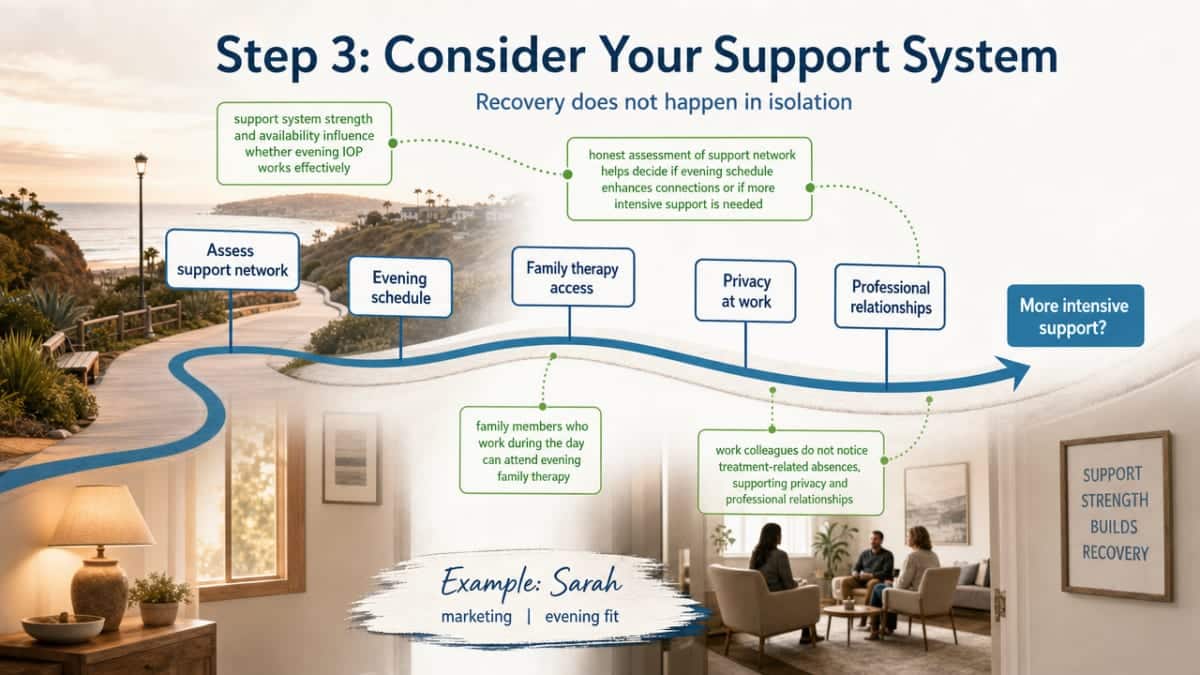
Recovery does not happen in isolation. The strength and availability of your support system plays a crucial role in determining whether evening IOP will work effectively for your situation. Taking time to honestly assess your current support network helps identify whether the evening schedule can enhance these connections or whether you will need more intensive support structures.
Evening IOP offers unique advantages for leveraging your support system. Family members who work during the day can attend evening family therapy sessions without taking time off, creating opportunities for involvement that daytime programs might not allow. Your work colleagues will not notice treatment-related absences, protecting your privacy while maintaining professional relationships that provide structure and purpose.
Real-World Example: Consider Sarah, a marketing manager whose husband attended her weekly family sessions after putting their children to bed. His participation in evening sessions allowed him to understand her triggers and recovery strategies without disrupting his work schedule or their children’s routines.
Evaluate whether your living situation supports evening recovery work. Can family members participate in evening sessions? Do you have sober friends or community connections available during daytime hours when you are not in treatment? Will maintaining your job or school schedule provide stabilizing structure, or does your current environment include active substance use and enabling behaviors that require more intensive intervention?
Assessing Home Environment Stability
Assessing the stability of your home environment is an essential step when considering evening IOP. For many, a safe and steady home makes it much easier to commit to treatment and apply new coping skills. Start by reflecting on your living situation. Are you living with people who support your recovery and respect your treatment goals?
Research shows that individuals with a supportive home are more likely to stay engaged in evening IOP and experience lasting positive outcomes2. If you face challenges at home—like frequent arguments, unpredictable routines, or exposure to substances—think about steps to reduce these risks. This could include setting boundaries, talking with household members about your needs, or seeking outside support from friends or recovery groups.
Identifying Available Recovery Resources
Identifying available recovery resources is an important part of deciding if evening IOP can work for you. Recovery resources come in many forms, including peer support groups, counseling services, community organizations, and online platforms. These resources can help you stay motivated, offer guidance between sessions, and provide a sense of belonging as you move through the program.
| Resource Type | Examples | Benefits |
|---|---|---|
| Peer Support Groups | SMART Recovery, 12-step groups | Shared experiences, encouragement |
| Community Services | Local clinics, faith groups | Additional counseling, activities |
| Online Platforms | Virtual meetings, forums | Flexible access, anonymity |
Seeking out these supports can make your evening IOP experience more successful and help you sustain progress well after the program ends2.
Step 4: Review Practical Considerations
Before committing to this treatment option, take time to evaluate the practical aspects that will affect your daily participation. Evening IOP requires consistent attendance, typically three to five evenings per week for several hours each session. Consider how this schedule aligns with your current work commitments, family responsibilities, and other obligations.
Transportation plays a crucial role in maintaining regular attendance at your treatment sessions. Identify how you will get to and from the facility, whether through personal vehicle, public transportation, or support from family members. Some facilities offering this program provide assistance with transportation arrangements or can connect you with resources in the community.
Childcare needs deserve careful attention when planning for after-hours treatment. Determine who can care for your children during therapy hours and establish backup plans for unexpected situations. Many people successfully complete their recovery program by coordinating with partners, family members, or trusted friends to create a reliable childcare schedule.
Insurance Coverage and Accessibility
Understanding insurance coverage and accessibility is a key step when considering an evening IOP. Many people are surprised to find that most major insurance plans, including employer-provided policies and Medicaid, often cover these services when they are medically necessary1. However, coverage details and requirements can vary, so it is valuable to call your insurance provider directly and ask specific questions about what is included.
| Feature | Questions to Ask |
|---|---|
| Insurance Network | Is the evening IOP in-network with my plan? |
| Virtual Access | Are remote or hybrid sessions available? |
| Transportation Help | Is there assistance if I lack reliable transit? |
By reviewing these factors ahead of time, you can choose an evening IOP that matches both your financial situation and your daily needs, supporting a smoother start to your recovery journey4.
Common Concerns About Evening Programs
Many people have understandable concerns before starting an evening IOP. One common worry is whether attending sessions in the evening will interfere with family responsibilities or personal downtime. The flexible scheduling was designed to minimize disruption, allowing participants to meet their obligations while still prioritizing mental health or substance use support4.
Some individuals wonder if group sessions at night will feel less personal or supportive. In reality, evening IOP programs use small groups and evidence-based therapies, ensuring participants receive attentive, compassionate care3. Transportation and safety after dark can also be a concern, but many providers now offer virtual and hybrid options, making it easier to attend from home4.
Making Your Evening IOP Decision
Choosing an evening IOP represents a significant step toward recovery. To make the best decision, bring together the key factors you have evaluated: your daily life demands (work, family, education), your specific treatment needs (substance use severity, co-occurring conditions), your available support system, and the practical logistics (location, schedule, insurance coverage).
Use this decision-making framework when evaluating programs. During facility tours, ask about staff credentials and turnover rates, request detailed curriculum information, and inquire about their approach to co-occurring disorders. Observe the physical environment—does it feel safe and conducive to healing? Request to see their licensing documentation and verify accreditation through CARF or Joint Commission databases.
Before committing to any program, schedule a professional assessment with a licensed addiction counselor or mental health professional. This clinical evaluation will clarify your treatment needs and confirm whether evening IOP offers the appropriate level of care, or whether you might benefit from more intensive support initially. Many programs offer free assessments that include this professional guidance.
Frequently Asked Questions
Can I transition from daytime to evening IOP if my work schedule changes?
Yes, it is often possible to transition from a daytime program to an evening IOP if your work schedule or other life circumstances change. Many treatment providers recognize that people’s schedules are not static, and they aim to offer flexibility to help you stay engaged with your recovery. This flexibility is one of the key advantages of evening IOP, as it allows participants to continue getting evidence-based support while adjusting to new job hours or personal commitments4.
How does an evening IOP compare to traditional outpatient therapy in terms of effectiveness?
Evening IOP offers a higher level of support than traditional outpatient therapy, which typically involves one session per week. In contrast, evening IOP provides multiple sessions each week, allowing for more frequent contact with counselors and peers. This structure helps participants build stronger coping skills and stay engaged in their recovery process. Research consistently shows that, for individuals with mild-to-moderate symptoms and a stable home environment, evening IOP is just as effective as inpatient or traditional daytime programs when it comes to reducing symptoms and supporting long-term wellness7.
What happens if I miss sessions due to unexpected work or family emergencies?
Missing sessions in an evening IOP due to sudden work or family emergencies is a common concern and is handled with understanding by most providers. Evening IOP programs are built to support people with busy or unpredictable lives, so occasional absences are expected. If you must miss a session, it is important to let your care team know as soon as possible. Many evening IOPs offer make-up sessions, alternative meeting times, or virtual options to help you stay on track with your recovery goals.
Is an evening IOP appropriate for someone with active withdrawal symptoms?
Evening IOP is typically not recommended for individuals experiencing active withdrawal symptoms. These symptoms can include severe physical discomfort, risk of medical complications, or significant changes in mood and behavior that may require close monitoring. Most evening IOP programs are designed for people who have already completed withdrawal or who do not need around-the-clock medical supervision. If you or someone you care about is currently in withdrawal, it is safer to seek help from a medically supervised detox or inpatient program first.
How can family members participate in my evening IOP treatment?
Family members can play an active and supportive role in your evening IOP treatment. Many evening IOP programs encourage loved ones to participate through educational workshops, family therapy sessions, or support groups designed specifically for families. Involvement may include joining certain parts of your sessions to learn more about recovery, developing healthier communication skills, or understanding ways to support your progress at home.
Will my employer or colleagues find out I’m attending an evening IOP?
Your privacy is protected when you attend an evening IOP, and employers or colleagues are not automatically notified about your participation. Healthcare providers are required by law to keep your treatment information confidential under HIPAA (the Health Insurance Portability and Accountability Act) unless you give written permission to share it. Most people choose to schedule evening IOP sessions outside of work hours, further reducing the need to discuss their treatment with anyone at work.
Can I attend an evening IOP virtually or is in-person attendance required?
Yes, many evening IOP programs now offer virtual or hybrid options, making attendance more accessible for people with busy schedules, transportation barriers, or health concerns. This means you can often participate in evening IOP sessions from the comfort of your own home using a secure video platform, rather than having to be physically present at the treatment center. Virtual evening IOP provides the same level of structured support, group therapy, and skill-building as in-person programs.
References
- SAMHSA (Substance Abuse and Mental Health Services Administration). https://www.samhsa.gov/
- NIH/PMC Peer-Reviewed Research. https://www.ncbi.nlm.nih.gov/pmc/
- UCLA Health Resnick Neuropsychiatric Hospital – Dual Diagnosis IOP Program. https://www.uclahealth.org/psychiatry/dual-diagnosis-program
- Ohio State University Wexner Medical Center – Partial Hospitalization and IOP programs. https://wexnermedical.osu.edu/
- Cleveland Clinic – Health Information. https://my.clevelandclinic.org/
- JAMA Network – Published Research. https://jamanetwork.com/
- American Psychological Association – PTSD Treatment Guidelines. https://www.apa.org/ptsd-guideline
- International OCD Foundation – ERP Resources. https://iocdf.org/
- SMART Recovery – Evidence-Based Research. https://www.smartrecovery.org/
- Recovery Research Institute – Relapse Prevention Frameworks. https://www.recoveryanswers.org/